Blog

- /home/u134898463/domains/explore-dubai.com/public_html/wp-content/plugins/mvp-social-buttons/mvp-social-buttons.php on line 27
Warning: Trying to access array offset on value of type bool in /home/u134898463/domains/explore-dubai.com/public_html/wp-content/plugins/mvp-social-buttons/mvp-social-buttons.php on line 27
&description=', 'pinterestShare', 'width=750,height=350'); return false;" title="Pin This Post">
- Share
- Tweet /home/u134898463/domains/explore-dubai.com/public_html/wp-content/plugins/mvp-social-buttons/mvp-social-buttons.php on line 72
Warning: Trying to access array offset on value of type bool in /home/u134898463/domains/explore-dubai.com/public_html/wp-content/plugins/mvp-social-buttons/mvp-social-buttons.php on line 72
&description=', 'pinterestShare', 'width=750,height=350'); return false;" title="Pin This Post">
{H1}Dubai 2025: Navigating the Tech Pulse of a Smart City{/H1}
{H2}The Digital Journey That Started in 2015{/H2}
{P}Dubai’s ambition to become a global tech hub began at the turn of the last decade. Back in 2015, the city announced the Smart Dubai Initiative, a roadmap that promised 5G infrastructure, data‑driven services and an ecosystem that would attract startups, investors and talent from around the world. The momentum built over the past years has turned Dubai into a living laboratory where new ideas are not just tested – they are deployed. Today, almost every facet of life in the city feels powered by a digital layer: from the moment you step onto a street, a sensor records temperature and air quality; later, your smartphone prints a ticket that is automatically updated by sensors in a bus; at night, the city’s skyline is lit by LEDs that respond to weather data. {/P}
{H2}Why Smart City Means Smart People{/H2}
{P}The most striking feature of Dubai’s transformation is not just the technology itself, but how the city’s residents and businesses have embraced it. Key operators across sectors – finance, tourism, construction, health – collaborate with municipal authorities to make data an asset, not a liability. Innovation hubs, which host hackathons, mentorship programmes and seed funding, continually churn out solutions that solve real‑world problems. For example, a local venture built a logistics app that uses machine learning to optimize delivery routes, saving fuel and cutting carbon emissions. Such partnerships between the public sector, academia and the private sector form the backbone of Dubai’s data strategy. {/P}
{H2}Infrastructure That Connects & Propels Growth{/H2}
{H3}Internet of Things Everywhere{/H3}
{P}Dubai invests heavily in the Internet of Things (IoT). Every major building, arterial road and public transport terminal is equipped with sensors that gather data on traffic flow, energy use, weather and even sound levels. City administrators can then use this data to adjust traffic signals in real time, reduce congestion and improve safety. The same sensor network supports the water‑management system, ensuring that leakage is detected and repaired instantly. These connections mean that critical services respond instantly, reducing costs and improving quality. {/P}
{H3}High‑Speed Connectivity, 5G & Beyond{/H3}
{P}One of the cornerstones of Dubai’s tech narrative is high‑speed wireless infrastructure. The city has rolled out 5G coverage across major districts, enabling ultra‑low‑latency applications: autonomous ground vehicles, drone delivery pilots, and augmented‑reality tourist guides. By positioning itself as a testbed for the future, Dubai attracts telecommunications giants who install and trial new hardware, giving residents access to faster services while keeping the network under constant observation for potential upgrades. {/P}
{H2}Artificial Intelligence & Blockchain – The Dynamic Duo{/H2}
{H3}AI in Everyday Life{/H3}
{P}Artificial intelligence is woven into daily routines. Transportation services use predictive analytics to anticipate train schedules, while energy grids are managed by AI to balance load and renewables. Healthcare providers employ machine‑learning models to triage patients and predict disease outbreaks. Even retail experiences adapt instantly; a store’s displays re‑shop inventory data and suggest products to shoppers based on real‑time purchase patterns. The common theme is that AI turns raw data into actionable insights, making services anticipatory rather than reactive. {/P}
{H3}Blockchain for Transparent Governance{/H3}
{P}Blockchain technology has found a natural home in the public‑sector because it guarantees trust without a third party. Dubai’s municipality uses a permissioned ledger to maintain property records, ensuring that ownership and transaction history cannot be tampered with. The same system is used for notarised contracts, reducing paperwork and expediting approvals. Meanwhile, a financial regulator has explored a sandbox to test cross‑border payments, proving that blockchain can streamline remittances and cut fees. By integrating blockchain at the city level, Dubai sets a standard for secure, auditable data management. {/P}
{H2}Innovation Centres & Startup Culture{/H2}
{H3}Accelerators & Incubators{/H3}
{P}Dubai hosts a portfolio of innovation centres that provide seed capital, mentorship and workspace to early‑stage entrepreneurs. These accelerators, backed by local companies and venture capital funds, focus on tech verticals such as fintech, healthtech, and smart‑mobility. They provide the scaffolding for founders to pivot quickly, test ideas in the real market, and recruit talent from across the region. Many of these startups are now deploying solutions that power city services, from predictive maintenance for elevators to AI‑driven waste‑collection schedules. {/P}
{H3}University‑Industry Collaboration{/H3}
{P}Partnerships between universities and industry faculty drive research that translates into products quickly. Dubai’s main research universities host joint labs in smart‑mobility and blockchain, allowing students to work on real city data sets. The city also hosts an international research conference that attracts scholars from Europe, Asia and North America, increasing knowledge flux and ensuring that local solutions can compete globally. {/P}
{H2}Sustainability – Greening the Future City{/H2}
{H3}Renewable‑Energy Integration{/H3}
{P}Dubai’s vision for a low‑carbon future is anchored in widespread renewable‑energy adoption. Solar farms contribute a significant portion of the city’s electricity grid, while rooftop solar on residential and commercial buildings reduces demand on the network. Smart meters, connected to the city’s data hub, allow residents to monitor consumption and shift usage to off‑peak hours, reinforcing the optimisation loop. These measures keep the city powered sustainably while also lowering utility costs for households. {/P}
{H3}Smart Waste Management{/H3}
{P}Traditional waste collection often relies on schedule‑driven routes with limited responsiveness. Dubai’s waste system uses sensors on garbage bins to log fill levels. When a bin signals that it is nearing capacity, the waste‑management company receives a geo‑tagged alert and dispatches a vehicle to that specific route. This linear routing reduces fuel consumption and ensures that bins are emptied before overflowing, improving city hygiene. The system also feeds data back into city dashboards so that planners can identify high‑usage zones and propose targeted waste‑reduction campaigns. {/P}
{H2}Citizen‑Centric Digital Governance{/H2}
{H3}E‑Governance Portals & Mobile Apps{/H3}
{P}Dubai’s e‑governance ecosystem is built on a unified portal where citizens can pay utilities, renew permits, submit complaints and access government data. The portal reassures visitors that all government undertakings are transparent. Complementing the web service is a mobile app that offers real‑time updates on traffic, transit schedules, and public‑health alerts. These digital tools replace frustration with convenience, lowering the barrier for participation in civic life. {/P}
{H3}Citizen Engagement & Feedback Loops{/H3}
{P}The city employs social media and citywide pollings to gauge public sentiment on planned infrastructure projects. Feedback collected in real time informs the next phase of a project, ensuring that civic voices drive outcomes. For example, a city‑wide survey on park usage led to the construction of a new urban farm in a high‑density neighbourhood. Moreover, citizen analysts are invited to participate in data‑analytics hackathons, demonstrating how community data ownership can support urban governance. {/P}
{H2}Looking Ahead – 2025 to 2030{/H2}
{H3}Projected Tech Growth and Economic Impact{/H3}
{P}Authoritative estimates predict that by 2030 Dubai’s tech sector will contribute roughly 10 per cent of the national GDP. The city expects to generate over 20,000 jobs in fintech, AI research and sustainable‑mobility, especially in the high‑skill “tech‑plus” cluster. Infrastructure planning now includes a 30 per cent expansion in data‑center capacity to support the expected rise in cloud‑based services. The governments’ coordinated approach ensures that growth remains inclusive, with a view toward equal access for all residents. {/P}
{H3}Emerging Trend Forecasts{/H3}
{P}There are several emerging trends that are set to shape Dubai’s next decade. First, the use of quantum computing in logistics optimisation is being explored by a joint venture between a global university and the city’s transport authority. Second, AI‑driven mental health apps have been piloted in public hospitals, signalling an expansion into health services. Third, the city is testing a hyper‑loop‑style transit system for cross‑city connections, which could cut commute times by half relative to current metro service. These initiatives illustrate how Dubai continues to pioneer solutions that could become new industry standards. {/P}
{H2}Keep Exploring – How to Dive Deeper{/H2}
{P}If you want to learn more about the technologies shaping Dubai’s future, we recommend checking out the following articles:
- Dubai 2025: The Technology Pulse You Can’t Miss
- Exploring Dubai’s Tech Revolution: Smart Cities, AI and the Future You’re Inviting
- Dubai’s Tech Pulse: How Smart Cities, AI and Blockchain Are Shaping Tomorrow
These pieces dive into the details of the city’s initiative, showcase real‑world projects and explore future prospects. {/P}
{p}Thank you for joining us on this tour of Dubai’s technological landscape. As the city continues to evolve, one question stays at the forefront: how can we harness technology to create a more efficient, inclusive, and sustainable future for everyone? {/p}
Looking for a GCS Crypto Currency Licence and Registration in Dubai?
Welcome to our guide on Crypto currency license in Dubai. At GCS, we specialize in providing top-quality Crypto currency license services to meet your needs.
Why Choose Our Crypto currency license Services?
Our team of experienced professionals understands the importance of quality Crypto currency license in Dubai. We pride ourselves on delivering exceptional results and customer satisfaction.
Our Approach to Crypto currency license
We take a comprehensive approach to Crypto currency license, ensuring that every aspect of our service meets the highest standards. Our process includes:
- Thorough consultation to understand your specific needs
- Customized solutions tailored to your situation
- Ongoing support throughout the process
- Transparent communication at every step
Important Resources
For more information about Crypto currency license, check out these valuable resources:
- Crypto Currency Licence in Dubai
- Dubai Crypto Currency Licence
- Crypto Currency Registration in Dubai
- Dubai Crypto Currency Registration
- GCS Crypto Currency Licence in Dubai
Get Started Today
Ready to experience the difference our Crypto currency license services can make? Contact GCS today to schedule your consultation. Our team is standing by to answer your questions and help you get started on the path to success.
Don’t wait – reach out to us today and discover why so many people in Dubai trust GCS for their Crypto currency license needs.
Best Crypto currency license Services in Dubai
Welcome to our guide on Crypto currency license in Dubai. At GCS, we specialize in providing top-quality Crypto currency license services to meet your needs.
Why Choose Our Crypto currency license Services?
Our team of experienced professionals understands the importance of quality Crypto currency license in Dubai. We pride ourselves on delivering exceptional results and customer satisfaction.
Our Approach to Crypto currency license
We take a comprehensive approach to Crypto currency license, ensuring that every aspect of our service meets the highest standards. Our process includes:
- Thorough consultation to understand your specific needs
- Customized solutions tailored to your situation
- Ongoing support throughout the process
- Transparent communication at every step
Important Resources
For more information about Crypto currency license, check out these valuable resources:
- Crypto Currency Licence in Dubai
- Dubai Crypto Currency Licence
- Crypto Currency Registration in Dubai
- Dubai Crypto Currency Registration
- GCS Crypto Currency Licence in Dubai
Get Started Today
Ready to experience the difference our Crypto currency license services can make? Contact GCS today to schedule your consultation. Our team is standing by to answer your questions and help you get started on the path to success.
Don’t wait – reach out to us today and discover why so many people in Dubai trust GCS for their Crypto currency license needs.
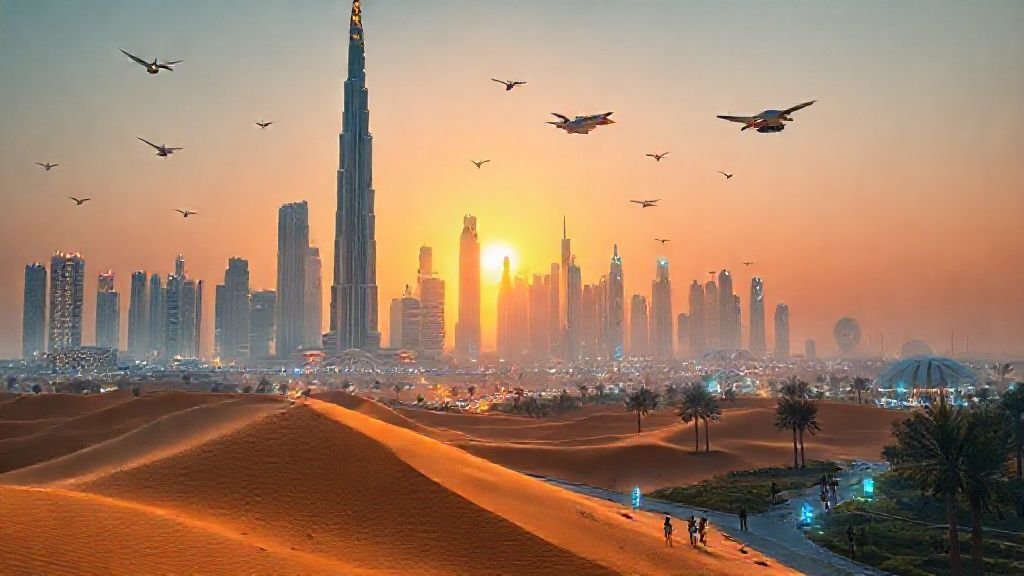
Dubai has always been a city that looks toward the future. From its iconic skyline to its ambitious plans for sustainability, the spirit of innovation is woven into every project. In 2025, the city is stepping into a new era where technology is not just a tool but a living system that powers everyday life, reshaping how residents work, travel, shop and connect.
1. The Birth of a Smart City
When most people think of a smart city, images of connected traffic lights, billboards that update in real time, and drones delivering packages come to mind. Dubai’s journey began with the Smart Dubai programme, which set out to create a city where digital services are delivered more efficiently and transparently. The programme’s core goals were:
- Digital identity for citizens and residents.
- Integrated data platform for city services.
- Smart infrastructure that adapts to real‑time needs.
- Encouragement of start‑ups and tech investment.
These pillars laid the groundwork for a city that can react to the needs of its people instantly, making daily life smoother and more rewarding. This foundation also helped launch a wave of projects that pushed Dubai ahead of the global curve.
2. Artificial Intelligence Takes the Driver’s Seat
Artificial Intelligence (AI) has become the engine behind many of Dubai’s newest achievements. From predictive policing that helps keep streets safe to AI‑powered logistics that reduce delivery times, the technology is changing every sector.
Transportation and Mobility
The Dubai Metro’s robots now run maintenance checks without human intervention. Autonomous buses navigate the sidewalks, delivering passengers between business districts with minimal delays.
Healthcare Revolution
AI algorithms predict potential health risks based on lifestyle and genetic data, allowing doctors to intervene early. Virtual consultations powered by AI chatbots provide instant medical advice, freeing up specialists for complex cases.
Public Safety and Law Enforcement
Machine‑learning models detect unusual crowd movements and highlight potential security threats before they grow. Law‑enforcement drones patrol the city, ensuring that emergency response is swift and efficient.
By embedding AI into everyday services, Dubai turns its metropolis into a responsive organism that learns and grows with its people.
3. Blockchain: The Invisible Ledger of Modern Life
While blockchain has made headlines in finance, its real power lies in its transparency and security. Dubai has leveraged the technology to create tamper‑proof systems across government, healthcare, and logistics.
One notable example is the Digital Health Pass—an immutable record that tracks vaccination, medical history, and health alerts. Similarly, property transactions are recorded on a blockchain, cutting down paperwork and fraud while speeding up closing times.
These applications not only add value for the government but also provide a sense of trust for residents and investors alike.
4. The Architecture of Tomorrow: Smart Skyscrapers and Infrastructure
Dubai’s skyline is home to more than just office space; it is a living laboratory for sustainable design. Buildings now incorporate:
- Energy Harvesting Windows: Transparent solar panels that provide electricity to the building’s systems.
- Responsive Facades: Skin that adjusts to sunlight and temperature, keeping interiors comfortable while lowering energy usage.
- Water Recycling Systems: On‑site purification that reduces municipal water demand.
These features not only reduce carbon footprints but also lower operational costs, making high‑rise living accessible to a wider audience.
5. Technology Hubs and the Start‑up Ecosystem
The city’s growth is driven partly by its vibrant ecosystem for technology start‑ups. Numerous incubators provide mentorship, financing, and access to venture capital. Key areas of focus include:
- FinTech solutions simplifying banking for the cloud‑native generation.
- EdTech platforms that bring personalized learning to anyone on the move.
- HealthTech that integrates wearable data with AI diagnostics.
- Supply chain technology creating end‑to‑end traceability.
Dubai’s open data initiatives give start‑ups a wealth of information—making it easier to test and scale products that fit the local market and can also export worldwide.
6. The Human Touch: Building Tech Culture
Innovation is only as good as the people behind it. Dubai invests heavily in human capital: from schools teaching coding from kindergarten to higher‑education programmes that put AI and blockchain at the forefront.
Workshops lead residents to create their own mini‑projects, giving them a sense of ownership over the urban digital narrative. These efforts foster a public appetite for technology, ensuring that the next wave of ideas will come from diverse voices.
7. Looking Ahead: What Lies Beyond 2025?
The ambition never stops. While 2025 has delivered massive strides, the sights are now set on a more interconnected yet sustainable system.
- Zero‑carbon buildings enabled by nanomaterials.
- Hyper‑fast transport links into the desert, turning islands into bustling hubs.
- Advanced AI that helps residents live healthier lifestyles by predicting needs.
- Fully autonomous commercial districts where order and efficiency thrive.
These future projects are based on data collected in real time, meaning the city can adapt quickly to changing aspirations.
Dubai’s transformation demonstrates how creating a digital ecosystem, backed by supportive policy, can accelerate progress for all residents and set a global example for future city planning.
Want to read more about how Dubai is turning skyscrapers into AI hubs? Explore our story on skyscraper AI transformation.
Curious how the city’s smart system uses AI and blockchain to improve everyday life? Dive into the pulse of Dubai’s tech evolution.
Still wondering how visionary dreams turned into a reality of smart cities and AI? Discover the journey of Dubai’s tech pulse.


Looking for a GCS Crypto Currency Licence and Registration in Dubai?

Best Crypto currency license Services in Dubai

Dubai 2025: The Tech Revolution Unveiled – From Smart Cities to AI‑Driven Innovation

Top 10 Highest-Paying Jobs in Dubai for 2024-25

How Much Does It Cost to Open a Company in Dubai in 2024?

Top 10 Business Opportunities in Dubai for 2024-2025
-

 Business2 years ago
Top 10 Highest-Paying Jobs in Dubai for 2024-25
-
Business2 years ago
How Much Does It Cost to Open a Company in Dubai in 2024?
-
Business2 years ago
Top 10 Business Opportunities in Dubai for 2024-2025
-
Business2 years ago
Best upcoming exhibitions and trade shows in Dubai, 2024
-
Blog2 years ago
Places to Visit in Ras Al Khaimah
-
Sports2 years ago
Top 5 Upcoming International Sporting Events in Dubai (2024-2025)
-
Latest6 months ago
Dubai Golden Visa 2025: Everything You Need to Know About Eligibility, Benefits and Application Process
-
Business2 years ago
Top 5 Networking Events for Businesses in Dubai in 2024