Blog
Dubai’s Tech Ecosystem: From Smart Urban Planning to Cutting‑Edge Blockchain

- /home/u134898463/domains/explore-dubai.com/public_html/wp-content/plugins/mvp-social-buttons/mvp-social-buttons.php on line 27
https://explore-dubai.com/wp-content/uploads/2025/10/ultrarealistic-highresolution-panoramic-view-of-dubais-iconic-skyline-at-twilight-featuring-the-1000x576.jpg&description=Dubai’s Tech Ecosystem: From Smart Urban Planning to Cutting‑Edge Blockchain', 'pinterestShare', 'width=750,height=350'); return false;" title="Pin This Post">
- Share
- Tweet /home/u134898463/domains/explore-dubai.com/public_html/wp-content/plugins/mvp-social-buttons/mvp-social-buttons.php on line 72
https://explore-dubai.com/wp-content/uploads/2025/10/ultrarealistic-highresolution-panoramic-view-of-dubais-iconic-skyline-at-twilight-featuring-the-1000x576.jpg&description=Dubai’s Tech Ecosystem: From Smart Urban Planning to Cutting‑Edge Blockchain', 'pinterestShare', 'width=750,height=350'); return false;" title="Pin This Post">
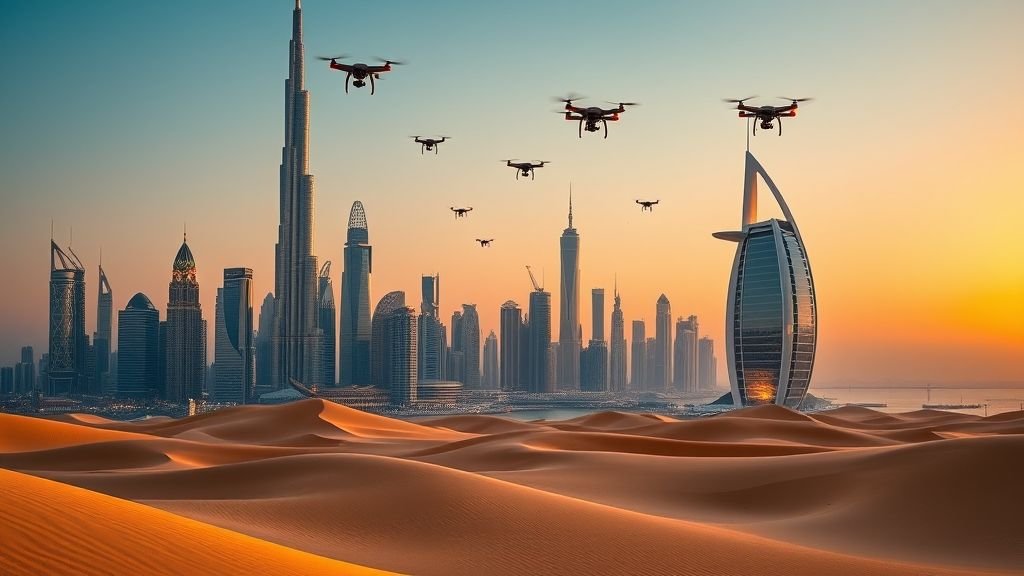
Dubai has long been known for its towering skyline, luxury shopping malls, and record‑setting amusement parks. In the past decade, the city’s growth curve has shifted gears toward a new kind of innovation: technology. Whether you’re an entrepreneur, a tech enthusiast, or a visitor looking for the next big gadget, Dubai’s tech scene offers a full spectrum of possibilities—from smart‑city initiatives that power everyday life to a thriving blockchain hub that is attracting global attention.
Why Dubai Is a Hotspot for Tech Investment
Dubai’s geographic position as a gateway between the East and the West gives it a natural advantage. It sits on a network of major shipping lanes and has a robust ports infrastructure. That alone yields a competitive edge, but the government’s proactive approach to digital transformation has cemented the city as a leader in technology adoption.
Three strategic pillars drive this momentum:
- Government Support: The Dubai Smart City roadmap, launched in 2015, set out to integrate digital services into nearly every aspect of city life—transport, utilities, healthcare, and more.
- Incentive Structures: Free zones such as Dubai Internet City and Dubai Media City provide 100 % foreign ownership, tax exemption, and streamlined licensing processes for tech firms.
- Talent Pipeline: With universities like the American University of Dubai and the Dubai School of Digital Arts, local talent is increasingly trained in emerging technologies such as AI, blockchain, and IoT.
All these factors combine to make Dubai a low‑risk environment for tech startups and investment opportunities. As a result, countless venture capital firms, accelerators, and corporate incubators have set up shop here, eager to tap into a wealthy, digitally literate consumer base. The outcome? An ecosystem that nurtures high‑growth, high‑impact tech businesses.
Smart Cities: Turning Urban Infrastructure into Data-Driven Digital Services
One of Dubai’s most talked‑about initiatives is its transformation into a “smart city.” At its core, this program turns physical infrastructure into a digital ecosystem that can be monitored, managed, and optimized in real time.
Take the Dubai Roads and Transport Authority (RTA) as an example: Sensors embedded in traffic lights and in‑car GPS units feed data into a city‑wide platform, allowing authorities to adjust signal timing dynamically to reduce congestion. The same technology also powers Dubai’s autonomous vehicle trials, where fleets of driverless cars navigate the city’s streets under the supervision of artificial intelligence (AI) algorithms.
Other areas of the smart city initiative include:
- Smart parking solutions that guide drivers to available spots via a mobile app.
- The Ultimate Mobility Platform, which integrates public transit, ride‑hailing, and traditional taxi services into a single interface.
- Digital utilities billing, where residents receive real‑time usage data and can manage their energy consumption through a mobile portal.
Each of these success stories underscores the power of data to enhance everyday life. For entrepreneurs, the smart‑city framework also offers actionable insights—say, identifying underserved markets for new mobility‑as‑a‑service apps or for sensor‑heavy smart home devices.
Dubai’s Blockchain Boom: The City’s Competitive Edge
Blockchain technology has moved beyond cryptocurrency into areas such as logistics, real‑estate, and government services. Dubai is fast becoming a global blockchain hub. The city was one of the first to legalise crypto exchanges, and its legal framework now allows for digital asset licensing, making it a safe launchpad for blockchain startups.
In 2023, the Dubai Chamber of Commerce and Industry announced a memorandum of understanding with the blockchain industry to support projects that could improve supply chain transparency. Nationwide blockchain pilots are already in place for:
- Real‑estate transaction traceability.
- Electronic visas issued via smart contracts.
- Supply‑chain management for food distribution.
These initiatives not only underscore Dubai’s open‑adventure stance toward technology but also provide a real business environment where blockchain solutions can be tested, validated, and expanded. Entrepreneurs looking for a sandbox to experiment with DeFi or smart‑contract‑based logistics will find Dubai not only supportive but also statistically the fastest-growing blockchain market in the Middle East.
Investing in AI: Dubai’s Bid to Lead the Tech Revolution
Artificial Intelligence is at the heart of many of Dubai’s flagship projects. From the Dubai government’s AI-powered public service portal to AI‑driven manufacturing lines in industrial parks, the stack is rich and varied.
Significant IoT investment, driven by the Dubai AI Revolution 2025 initiative, has coupled machine‑learning capabilities with 5G infrastructure to build a new wave of predictive services. For example, AI models now predict electricity demand patterns across neighborhoods, allowing the city to prevent overloads before they happen.
Meanwhile, private companies are converging on AI to solve industry-specific problems. A global biomedical company uses machine‑learning models to predict disease outbreaks based on regional climate data. An automotive firm uses AI to optimize manufacturing processes, cutting costs by 20 % while improving safety.
When Dubai hosted the Global AI Summit last year, it confirmed its status as a frontrunner in AI research and deployment. And for start‑ups, the existence of AI‑accelerators and ground‑up research labs means that even a small team can quickly prototype, secure funding, and scale solutions worldwide.
The Role of Emerging Tech in Daily Life
While the headlines focus on AI and blockchain, several other technologies are quietly reshaping how people live in Dubai. For instance, the integration of IoT in public buildings allows for instant temperature and lighting controls, automatically adjusting to the number of occupants. Virtual reality (VR) is now a common entertainment experience at shopping malls, and augmented reality (AR) is being used by real‑estate developers to show potential buyers virtual walkthroughs of properties in the ground floor of giants such as the Burj Khalifa.
You may already notice these tech touches in your daily life. This paper, The 6 Essential Types of Technology Impacting Daily Life, lists these innovations and explains how they improve convenience, reduce cost, and ultimately raise the standard of living.
5G: The Backbone of a Connected City
Dubai’s 5G rollout has opened doors for everything from autonomous taxis to telemedicine. According to the latest rollout statistics, more than 70 % of Dubai’s population now has access to 5G network, meaning data-heavy services such as real-time VR concerts or augmented‑reality navigation tools can enjoy near‑line speed without buffering.
For businesses, 5G facilitates better analytics, faster prototyping, and even the development of new services that can only exist in a low-latency environment—such as drone delivery or real‑time inventory management.
Edge Computing: Powering Decentralised AI
Edge computing, or data processing close to the source of data generation, is essential for both the smart city infrastructure and the AI ecosystem. The lower the distance the data travels, the faster it can be processed, making real‑time decision making possible.
Take the example of autonomous vehicles. Sensors on a vehicle may gather terabytes of data each day. Instead of sending all of this back to a central data center for analysis, edge devices on the vehicle itself can interpret most of the data, allowing the car to make split‑second decisions without a lag.
Edge devices are being deployed across several sectors in Dubai: from power grid management where smart meters send data to local processors, to retail where AI-backed analytics within stores gauge customer behaviour before it even enters the database.
Key Takeaways for Tech Entrepreneurs
If you’re a tech founder, consider the following as you plan your next venture in Dubai:
- Align your business idea with one of the city’s smart‑city priorities—transport, utilities, or healthcare.
- Seek sectors that are blockchain‑friendly; early entry may secure first‑mover advantage.
- Leverage the free‑zone infrastructure for 100 % ownership but be mindful of the local partner requirement if you choose a mainland setup.
- Partner with local universities and research labs for talent and R&D collaboration.
- Use the city’s extensive digital assembly to pilot proof‑of‑concept projects before scaling nationwide.
Future Outlook: What’s Next for Dubai’s Tech Landscape?
Dubai is already a leader in AI and blockchain, but the next wave of technological disruption likely lies in sustainability and quantum computing. The city’s climate‑friendly initiatives, such as the Dubai Solar Park, aim to integrate renewable energy sources into the smart grid, creating an ecosystem where AI predicts energy use and balances supply with real‑time weather data.
In the realm of quantum, early studies by academia in conjunction with the Dubai Science Park are exploring quantum‑enhanced cryptography, which could offer a level of security that’s nearly impossible for traditional encryption systems to match. Although still in developmental phases, this area might become a core differentiator for Dubai as countries around the region look to secure their digital infrastructures.
Meanwhile, the public‑private partnership model continues to deepen. The Dubai government has pledged to invest upwards of AED 10 billion in technology research by 2030, ensuring that start‑ups have financial access to graduate‑level labs, mentorship programs, and venture funding competitions.
For someone looking to dive into Dubai’s tech ecosystem, the message is clear: if your idea can deliver tangible, scalable benefits—be it reducing traffic congestion, providing secure identity solutions, or delivering low‑cost internet connectivity—Dubai will be ready to support and grow that idea.
Interlinking Knowledge: Explore More Deep Dives
To get a fuller picture of how these technologies fit together, you might find the following resources useful:
- Exploring Dubai’s Thriving Tech Scene: Innovations Shaping the Future – A detailed walkthrough of key sectors.
- How Dubai Is Leading the AI Tech Revolution in 2025 – A factual look at AI deployment.
- The 6 Essential Types of Technology Impacting Daily Life – A practical guide on everyday tech.
By exploring these articles, you can gain a better understanding of how each technology layer— from smart infrastructure to blockchain to AI—interacts with one another to build a cohesive, forward‑thinking ecosystem. Whether you’re planning to launch a product or simply want to stay informed, these insights help position Dubai as a truly digital city of the future.
Looking for a GCS Crypto Currency Licence and Registration in Dubai?
Welcome to our guide on Crypto currency license in Dubai. At GCS, we specialize in providing top-quality Crypto currency license services to meet your needs.
Why Choose Our Crypto currency license Services?
Our team of experienced professionals understands the importance of quality Crypto currency license in Dubai. We pride ourselves on delivering exceptional results and customer satisfaction.
Our Approach to Crypto currency license
We take a comprehensive approach to Crypto currency license, ensuring that every aspect of our service meets the highest standards. Our process includes:
- Thorough consultation to understand your specific needs
- Customized solutions tailored to your situation
- Ongoing support throughout the process
- Transparent communication at every step
Important Resources
For more information about Crypto currency license, check out these valuable resources:
- Crypto Currency Licence in Dubai
- Dubai Crypto Currency Licence
- Crypto Currency Registration in Dubai
- Dubai Crypto Currency Registration
- GCS Crypto Currency Licence in Dubai
Get Started Today
Ready to experience the difference our Crypto currency license services can make? Contact GCS today to schedule your consultation. Our team is standing by to answer your questions and help you get started on the path to success.
Don’t wait – reach out to us today and discover why so many people in Dubai trust GCS for their Crypto currency license needs.
Best Crypto currency license Services in Dubai
Welcome to our guide on Crypto currency license in Dubai. At GCS, we specialize in providing top-quality Crypto currency license services to meet your needs.
Why Choose Our Crypto currency license Services?
Our team of experienced professionals understands the importance of quality Crypto currency license in Dubai. We pride ourselves on delivering exceptional results and customer satisfaction.
Our Approach to Crypto currency license
We take a comprehensive approach to Crypto currency license, ensuring that every aspect of our service meets the highest standards. Our process includes:
- Thorough consultation to understand your specific needs
- Customized solutions tailored to your situation
- Ongoing support throughout the process
- Transparent communication at every step
Important Resources
For more information about Crypto currency license, check out these valuable resources:
- Crypto Currency Licence in Dubai
- Dubai Crypto Currency Licence
- Crypto Currency Registration in Dubai
- Dubai Crypto Currency Registration
- GCS Crypto Currency Licence in Dubai
Get Started Today
Ready to experience the difference our Crypto currency license services can make? Contact GCS today to schedule your consultation. Our team is standing by to answer your questions and help you get started on the path to success.
Don’t wait – reach out to us today and discover why so many people in Dubai trust GCS for their Crypto currency license needs.
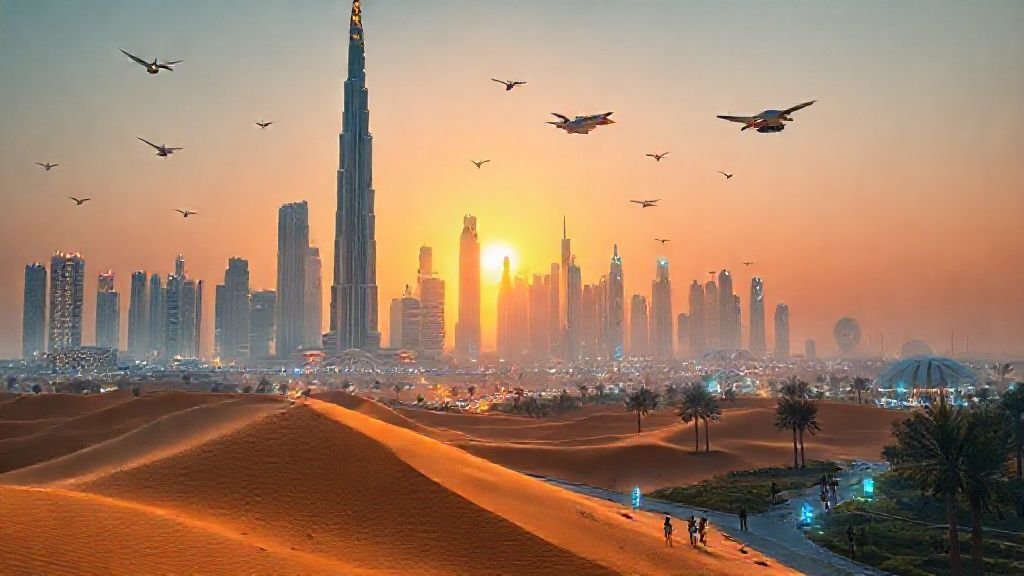
Dubai has always been a city that looks toward the future. From its iconic skyline to its ambitious plans for sustainability, the spirit of innovation is woven into every project. In 2025, the city is stepping into a new era where technology is not just a tool but a living system that powers everyday life, reshaping how residents work, travel, shop and connect.
1. The Birth of a Smart City
When most people think of a smart city, images of connected traffic lights, billboards that update in real time, and drones delivering packages come to mind. Dubai’s journey began with the Smart Dubai programme, which set out to create a city where digital services are delivered more efficiently and transparently. The programme’s core goals were:
- Digital identity for citizens and residents.
- Integrated data platform for city services.
- Smart infrastructure that adapts to real‑time needs.
- Encouragement of start‑ups and tech investment.
These pillars laid the groundwork for a city that can react to the needs of its people instantly, making daily life smoother and more rewarding. This foundation also helped launch a wave of projects that pushed Dubai ahead of the global curve.
2. Artificial Intelligence Takes the Driver’s Seat
Artificial Intelligence (AI) has become the engine behind many of Dubai’s newest achievements. From predictive policing that helps keep streets safe to AI‑powered logistics that reduce delivery times, the technology is changing every sector.
Transportation and Mobility
The Dubai Metro’s robots now run maintenance checks without human intervention. Autonomous buses navigate the sidewalks, delivering passengers between business districts with minimal delays.
Healthcare Revolution
AI algorithms predict potential health risks based on lifestyle and genetic data, allowing doctors to intervene early. Virtual consultations powered by AI chatbots provide instant medical advice, freeing up specialists for complex cases.
Public Safety and Law Enforcement
Machine‑learning models detect unusual crowd movements and highlight potential security threats before they grow. Law‑enforcement drones patrol the city, ensuring that emergency response is swift and efficient.
By embedding AI into everyday services, Dubai turns its metropolis into a responsive organism that learns and grows with its people.
3. Blockchain: The Invisible Ledger of Modern Life
While blockchain has made headlines in finance, its real power lies in its transparency and security. Dubai has leveraged the technology to create tamper‑proof systems across government, healthcare, and logistics.
One notable example is the Digital Health Pass—an immutable record that tracks vaccination, medical history, and health alerts. Similarly, property transactions are recorded on a blockchain, cutting down paperwork and fraud while speeding up closing times.
These applications not only add value for the government but also provide a sense of trust for residents and investors alike.
4. The Architecture of Tomorrow: Smart Skyscrapers and Infrastructure
Dubai’s skyline is home to more than just office space; it is a living laboratory for sustainable design. Buildings now incorporate:
- Energy Harvesting Windows: Transparent solar panels that provide electricity to the building’s systems.
- Responsive Facades: Skin that adjusts to sunlight and temperature, keeping interiors comfortable while lowering energy usage.
- Water Recycling Systems: On‑site purification that reduces municipal water demand.
These features not only reduce carbon footprints but also lower operational costs, making high‑rise living accessible to a wider audience.
5. Technology Hubs and the Start‑up Ecosystem
The city’s growth is driven partly by its vibrant ecosystem for technology start‑ups. Numerous incubators provide mentorship, financing, and access to venture capital. Key areas of focus include:
- FinTech solutions simplifying banking for the cloud‑native generation.
- EdTech platforms that bring personalized learning to anyone on the move.
- HealthTech that integrates wearable data with AI diagnostics.
- Supply chain technology creating end‑to‑end traceability.
Dubai’s open data initiatives give start‑ups a wealth of information—making it easier to test and scale products that fit the local market and can also export worldwide.
6. The Human Touch: Building Tech Culture
Innovation is only as good as the people behind it. Dubai invests heavily in human capital: from schools teaching coding from kindergarten to higher‑education programmes that put AI and blockchain at the forefront.
Workshops lead residents to create their own mini‑projects, giving them a sense of ownership over the urban digital narrative. These efforts foster a public appetite for technology, ensuring that the next wave of ideas will come from diverse voices.
7. Looking Ahead: What Lies Beyond 2025?
The ambition never stops. While 2025 has delivered massive strides, the sights are now set on a more interconnected yet sustainable system.
- Zero‑carbon buildings enabled by nanomaterials.
- Hyper‑fast transport links into the desert, turning islands into bustling hubs.
- Advanced AI that helps residents live healthier lifestyles by predicting needs.
- Fully autonomous commercial districts where order and efficiency thrive.
These future projects are based on data collected in real time, meaning the city can adapt quickly to changing aspirations.
Dubai’s transformation demonstrates how creating a digital ecosystem, backed by supportive policy, can accelerate progress for all residents and set a global example for future city planning.
Want to read more about how Dubai is turning skyscrapers into AI hubs? Explore our story on skyscraper AI transformation.
Curious how the city’s smart system uses AI and blockchain to improve everyday life? Dive into the pulse of Dubai’s tech evolution.
Still wondering how visionary dreams turned into a reality of smart cities and AI? Discover the journey of Dubai’s tech pulse.


Looking for a GCS Crypto Currency Licence and Registration in Dubai?

Best Crypto currency license Services in Dubai

Dubai 2025: The Tech Revolution Unveiled – From Smart Cities to AI‑Driven Innovation

Top 10 Highest-Paying Jobs in Dubai for 2024-25

How Much Does It Cost to Open a Company in Dubai in 2024?

Top 10 Business Opportunities in Dubai for 2024-2025
-

 Business2 years ago
Top 10 Highest-Paying Jobs in Dubai for 2024-25
-
Business2 years ago
How Much Does It Cost to Open a Company in Dubai in 2024?
-
Business2 years ago
Top 10 Business Opportunities in Dubai for 2024-2025
-
Business2 years ago
Best upcoming exhibitions and trade shows in Dubai, 2024
-
Blog2 years ago
Places to Visit in Ras Al Khaimah
-
Sports2 years ago
Top 5 Upcoming International Sporting Events in Dubai (2024-2025)
-
Latest7 months ago
Dubai Golden Visa 2025: Everything You Need to Know About Eligibility, Benefits and Application Process
-
Business2 years ago
Top 5 Networking Events for Businesses in Dubai in 2024