Blog
Dubai’s Tech Revolution 2025: How the City is Shaping Tomorrow

- /home/u134898463/domains/explore-dubai.com/public_html/wp-content/plugins/mvp-social-buttons/mvp-social-buttons.php on line 27
Warning: Trying to access array offset on value of type bool in /home/u134898463/domains/explore-dubai.com/public_html/wp-content/plugins/mvp-social-buttons/mvp-social-buttons.php on line 27
&description=Dubai’s Tech Revolution 2025: How the City is Shaping Tomorrow', 'pinterestShare', 'width=750,height=350'); return false;" title="Pin This Post">
- Share
- Tweet /home/u134898463/domains/explore-dubai.com/public_html/wp-content/plugins/mvp-social-buttons/mvp-social-buttons.php on line 72
Warning: Trying to access array offset on value of type bool in /home/u134898463/domains/explore-dubai.com/public_html/wp-content/plugins/mvp-social-buttons/mvp-social-buttons.php on line 72
&description=Dubai’s Tech Revolution 2025: How the City is Shaping Tomorrow', 'pinterestShare', 'width=750,height=350'); return false;" title="Pin This Post">
When most people think of Dubai, images of towering skyscrapers, glittering desert resorts, and luxury automobile showrooms usually come to mind. Yet, behind the gleaming façade lies a bustling ecosystem where technology is not an add‑on but a vital engine driving culture, economy, and lifestyle. From AI‑driven traffic lights to blockchain‑based trade platforms, the city is turning everyday life into a showcase of smart, digital innovation. This article walks you through the pillars of Dubai’s tech story, highlights how the local government and private sector are partnering, and offers tips for anyone who wants to plug into this vibrant scene.
Smart Cities – The Blueprint for a Connected Future
Dubai’s ambition to become a global smart city has been codified in several national plans. The focus goes beyond smart traffic management; it aims to streamline everything from waste collection to public safety using real‑time data and Internet of Things (IoT) devices. The city’s Smart Dubai initiative unites utilities, transportation, and municipal services under one digital umbrella, letting residents stream services through a single mobile app.
One of the most visible examples is the autonomous ride‑share network that uses AI to predict demand and route vehicles optimally. The city’s “Dubai Smart” dashboard lets citizens see traffic densities, public transport schedules, and even the status of charging stations for electric vehicles (EVs) on a live map. All these layers are interlinked, creating a seamless experience that redefines what it means to live in a metropolis.
For deeper insight into how Dubai’s smart strategies address day‑to‑day concerns, check out this in‑depth post: Dubai’s Tech Transformation: Smart Cities, AI, and Innovation.
AI and Automation – The Heartbeat of Digital Services
Artificial Intelligence has moved beyond research labs into the public domain. Dubai’s passport renewal process, for instance, is now handled by a chatbot that screens applicants, validates documents, and schedules appointments in minutes. In the tourism sector, AI‑powered recommendation engines match visitors with hotels, restaurants, and cultural events based on preferences and past behavior.
The government’s Machine Learning Solutions Program, coordinated by the Dubai Data Office, collects anonymised data from citizens, businesses, and transport providers. Using this data, machine‑learning models predict wastewater levels, forecast energy consumption, and run optimal maintenance schedules for public assets. This proactive approach reduces costs and improves the overall sustainability of the city.
Blockchain or the New Ledger in Commerce
Dubai’s free zones have become a fertile ground for blockchain startups. The city’s Regulatory Sandbox allows developers to test smart contracts with a simplified approval process. Notably, the Dubai International Financial Centre (DIFC) now hosts a dedicated blockchain hub where fintechs can explore asset tokenisation, cross‑border payments, and real‑estate title management on distributed ledgers.
Ride‑share companies already use digital tokens to manage loyalty programs, showcasing how blockchain is reshaping incentive systems as well. In addition, Dubai’s real‑estate sector increasingly uses non‑fungible tokens (NFTs) to represent ownership of fractional digital assets linked to physical properties.
Sustainability, Green Tech, and the Energy Transition
The city’s commitment to sustainability is reflected in its adoption of renewable energy projects, electric vehicle infrastructure, and green data centres. Dubai Metro’s most recent extension now runs on battery‑integrated regenerative braking, saving electricity across the network. The government has partnered with tech giants to pilot hydrogen‑fuelled buses that run invisible in the desert heat.
Energy‑efficiency audits for commercial buildings are now automated. Sensors installed in skyscrapers transmit data to a predictive engine that analyses cooling loads, glass performance, and occupancy patterns. The resulting insights help building managers reduce energy consumption by up to 30% annually.
Entrepreneurs and Startups – Opportunities in the Digital Marketplace
Dubai’s 2025 economic strategy places strong emphasis on tech entrepreneurship. The city offers a variety of free zones, each with sector‑specific licences that lower barriers for AI, fintech, and IoT enterprises. The Dubai Virtual Marketing Agency’s latest guide explains how a remote startup can leverage a free zone licence to fast‑track market entry, secure IP protection, and access a network of investors.
Funding sponsors—such as the Dubai Technology Entrepreneur Centre (DTEC)—host regular pitch events. These sessions provide early‑stage companies with mentorship from seasoned entrepreneurs, exposure to venture capital, and a direct line to government-backed innovation grants. According to a 2024 survey, more than half of Dubai’s tech startups that joined the DTEC achieved Series A financing within 18 months.
Realised Benefits for Smart Startups
- Fast‑track licensing under the Smart City Programme.
- Access to the region’s largest cloud‑computing infrastructure.
- Networking hubs like the Dubai Silicon Oasis and Innovation Districts.
- Collaborative partnerships with universities and research hospitals.
Entrepreneurs should also keep an eye on the city’s upcoming Smart Dubai Hackathon, scheduled for October 2025, where teams will compete to build AI and blockchain solutions for municipal services.
The Government’s Role in Nurturing Innovation
Dubai’s visionary leadership has championed tech as a pillar of economic diversification. The Smart Dubai Strategy 2030, launched in 2018, outlines a roadmap that includes five priority areas: governance, technology, quality of life, sustainable development, and economic development. Each area has a clear set of implementation targets and performance metrics, which are tracked in a public dashboard.
Policy initiatives such as the ‘National Innovation Fund’ and preferential tax schemes for tech‑focused free zone companies further encourage investment. The city also offers a “Digital Curation Grant” that funds the localisation of AI, IoT, and robotics solutions aimed at enhancing public sector services.
To understand how Dubai’s policies directly influence the trade of digital services, look at this commentary: Dubai’s Digital Pulse: Tech Trends & Opportunities in 2025.
Challenges that Remain
While the trajectory is positive, some challenges persist:
- Cybersecurity: As data volumes grow, protecting citizen information has become a top priority. The government’s dedicated cybersecurity unit collaborates with private sector firms to build resilience.
- Digital Literacy: Not every resident has the technical knowledge required to engage fully with smart services. Community training programs aim to bridge this gap.
- Infrastructure Costs: Expanding fibre‑optic networks and deploying ubiquitous sensors require massive upfront capital. Public‑private partnerships are the typical solution.
- Regulatory Alignment: When AI and blockchain move faster than policy, gaps arise. Dubai’s Regulatory Sandbox is built to mitigate this, but ongoing updates are essential.
The city’s ability to adapt swiftly will determine how smoothly these challenges are resolved.
Future Outlook – What 2026 and Beyond Might Look Like
Looking ahead, the next chapter of Dubai’s digital story will likely revolve around:
- Hyper‑Autonomous Transportation: City bus fleets will shift from semi‑autonomous to fully autonomous, orchestrated by a city‑wide AI hub.
- Quantum Computing Pilot Projects: Startups will partner with government labs to benchmark quantum algorithms for logistics and energy grid optimisation.
- Decentralised Finance (DeFi) Platforms: Legally accepted DeFi marketplaces will allow micro‑investing in real‑estate parcels and infrastructure projects.
- Urban Farming 2.0: IoT‑controlled vertical farms will be integrated into the city’s food supply chain, reducing dependency on imports.
- Human‑Centred AI: Policies around ethical AI usage and bias mitigation will be institutionalised.
Chainlink’s recent partnership with Dubai for blockchain‑driven resource allocation demonstrates the city’s openness to experimental technologies.
Industry‑Specific Innovations You Should Watch
- Healthcare: AI diagnostics that process MRI scans faster than radiologists.
- Finance: Real‑time AML monitoring using machine learning across transnational payments.
- Education: Adaptive learning platforms that tailor curricula to each student’s pace.
- Tourism: 3D‑printed, AI‑designed cultural artifacts available as immersive experiences.
- Construction: Robotics implementing precision drone surveys for building bulldozers.
These are not just futuristic concepts; many are already in pilot phases, with hands‑on data available through public government portals.
Looking Global – How Dubai Sets the Benchmark for Other Cities
Dubai’s clear success in digitising its economy serves as a model for emerging markets. By integrating smart governance, state‑of‑the‑art infrastructure, and an entrepreneurial ecosystem, the city demonstrates that technology can be a strategic lever for sustainable growth. If you’re an investor, policymaker, or techie looking to replicate this model, study the city’s approach to Dubai’s Tech Landscape: From AI to Smart Cities to see how they harmonise regulation, investment, and innovation.
Conclusion – Why Dubai Matters for Tech Enthusiasts
Dubai is no longer a token of opulence; it has turned its eyes to the cutting edge, investing heavily in AI, blockchain, digital infrastructure, and sustainable technology. The city’s open collaboration between the public and private sectors, robust regulatory frameworks, and commitment to experimentation make it the go-to place for anyone looking to test, launch, and scale a technology product in the Middle East.
Whether you are a seasoned startup founder, a curious technologist, or a policymaker, Dubai’s tech ecosystem offers a wealth of opportunities. Keep an eye on the city’s digital policies, participate in its innovation hubs, and most importantly, bring your ideas. In the end, the city’s story is still being written—so your contribution could shape the next chapter.
For more detailed insights about current tech trends, digital opportunities, and regulatory frameworks, explore these additional resources that someone might find handy for deeper dives:
Looking for a GCS Crypto Currency Licence and Registration in Dubai?
Welcome to our guide on Crypto currency license in Dubai. At GCS, we specialize in providing top-quality Crypto currency license services to meet your needs.
Why Choose Our Crypto currency license Services?
Our team of experienced professionals understands the importance of quality Crypto currency license in Dubai. We pride ourselves on delivering exceptional results and customer satisfaction.
Our Approach to Crypto currency license
We take a comprehensive approach to Crypto currency license, ensuring that every aspect of our service meets the highest standards. Our process includes:
- Thorough consultation to understand your specific needs
- Customized solutions tailored to your situation
- Ongoing support throughout the process
- Transparent communication at every step
Important Resources
For more information about Crypto currency license, check out these valuable resources:
- Crypto Currency Licence in Dubai
- Dubai Crypto Currency Licence
- Crypto Currency Registration in Dubai
- Dubai Crypto Currency Registration
- GCS Crypto Currency Licence in Dubai
Get Started Today
Ready to experience the difference our Crypto currency license services can make? Contact GCS today to schedule your consultation. Our team is standing by to answer your questions and help you get started on the path to success.
Don’t wait – reach out to us today and discover why so many people in Dubai trust GCS for their Crypto currency license needs.
Best Crypto currency license Services in Dubai
Welcome to our guide on Crypto currency license in Dubai. At GCS, we specialize in providing top-quality Crypto currency license services to meet your needs.
Why Choose Our Crypto currency license Services?
Our team of experienced professionals understands the importance of quality Crypto currency license in Dubai. We pride ourselves on delivering exceptional results and customer satisfaction.
Our Approach to Crypto currency license
We take a comprehensive approach to Crypto currency license, ensuring that every aspect of our service meets the highest standards. Our process includes:
- Thorough consultation to understand your specific needs
- Customized solutions tailored to your situation
- Ongoing support throughout the process
- Transparent communication at every step
Important Resources
For more information about Crypto currency license, check out these valuable resources:
- Crypto Currency Licence in Dubai
- Dubai Crypto Currency Licence
- Crypto Currency Registration in Dubai
- Dubai Crypto Currency Registration
- GCS Crypto Currency Licence in Dubai
Get Started Today
Ready to experience the difference our Crypto currency license services can make? Contact GCS today to schedule your consultation. Our team is standing by to answer your questions and help you get started on the path to success.
Don’t wait – reach out to us today and discover why so many people in Dubai trust GCS for their Crypto currency license needs.
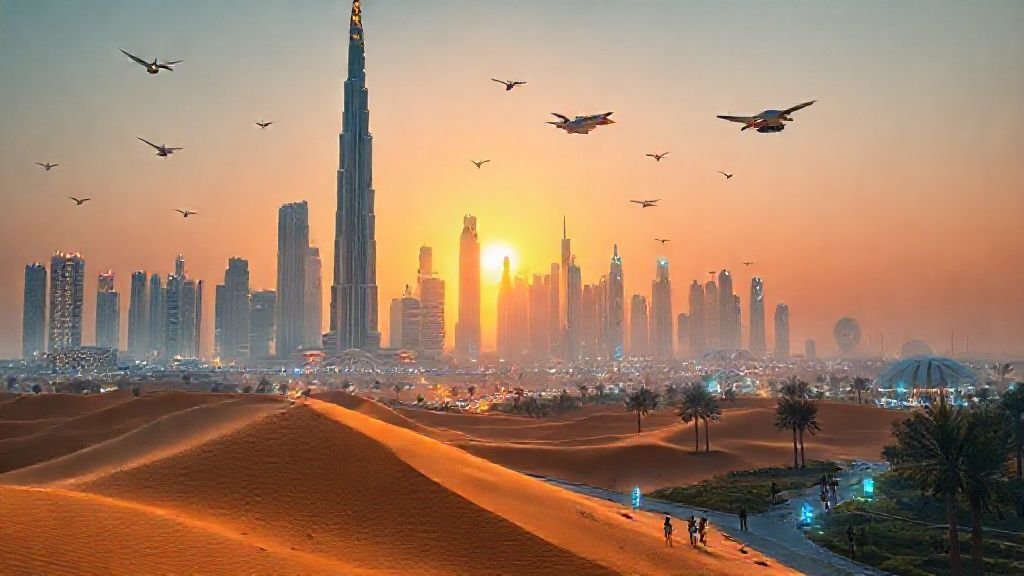
Dubai has always been a city that looks toward the future. From its iconic skyline to its ambitious plans for sustainability, the spirit of innovation is woven into every project. In 2025, the city is stepping into a new era where technology is not just a tool but a living system that powers everyday life, reshaping how residents work, travel, shop and connect.
1. The Birth of a Smart City
When most people think of a smart city, images of connected traffic lights, billboards that update in real time, and drones delivering packages come to mind. Dubai’s journey began with the Smart Dubai programme, which set out to create a city where digital services are delivered more efficiently and transparently. The programme’s core goals were:
- Digital identity for citizens and residents.
- Integrated data platform for city services.
- Smart infrastructure that adapts to real‑time needs.
- Encouragement of start‑ups and tech investment.
These pillars laid the groundwork for a city that can react to the needs of its people instantly, making daily life smoother and more rewarding. This foundation also helped launch a wave of projects that pushed Dubai ahead of the global curve.
2. Artificial Intelligence Takes the Driver’s Seat
Artificial Intelligence (AI) has become the engine behind many of Dubai’s newest achievements. From predictive policing that helps keep streets safe to AI‑powered logistics that reduce delivery times, the technology is changing every sector.
Transportation and Mobility
The Dubai Metro’s robots now run maintenance checks without human intervention. Autonomous buses navigate the sidewalks, delivering passengers between business districts with minimal delays.
Healthcare Revolution
AI algorithms predict potential health risks based on lifestyle and genetic data, allowing doctors to intervene early. Virtual consultations powered by AI chatbots provide instant medical advice, freeing up specialists for complex cases.
Public Safety and Law Enforcement
Machine‑learning models detect unusual crowd movements and highlight potential security threats before they grow. Law‑enforcement drones patrol the city, ensuring that emergency response is swift and efficient.
By embedding AI into everyday services, Dubai turns its metropolis into a responsive organism that learns and grows with its people.
3. Blockchain: The Invisible Ledger of Modern Life
While blockchain has made headlines in finance, its real power lies in its transparency and security. Dubai has leveraged the technology to create tamper‑proof systems across government, healthcare, and logistics.
One notable example is the Digital Health Pass—an immutable record that tracks vaccination, medical history, and health alerts. Similarly, property transactions are recorded on a blockchain, cutting down paperwork and fraud while speeding up closing times.
These applications not only add value for the government but also provide a sense of trust for residents and investors alike.
4. The Architecture of Tomorrow: Smart Skyscrapers and Infrastructure
Dubai’s skyline is home to more than just office space; it is a living laboratory for sustainable design. Buildings now incorporate:
- Energy Harvesting Windows: Transparent solar panels that provide electricity to the building’s systems.
- Responsive Facades: Skin that adjusts to sunlight and temperature, keeping interiors comfortable while lowering energy usage.
- Water Recycling Systems: On‑site purification that reduces municipal water demand.
These features not only reduce carbon footprints but also lower operational costs, making high‑rise living accessible to a wider audience.
5. Technology Hubs and the Start‑up Ecosystem
The city’s growth is driven partly by its vibrant ecosystem for technology start‑ups. Numerous incubators provide mentorship, financing, and access to venture capital. Key areas of focus include:
- FinTech solutions simplifying banking for the cloud‑native generation.
- EdTech platforms that bring personalized learning to anyone on the move.
- HealthTech that integrates wearable data with AI diagnostics.
- Supply chain technology creating end‑to‑end traceability.
Dubai’s open data initiatives give start‑ups a wealth of information—making it easier to test and scale products that fit the local market and can also export worldwide.
6. The Human Touch: Building Tech Culture
Innovation is only as good as the people behind it. Dubai invests heavily in human capital: from schools teaching coding from kindergarten to higher‑education programmes that put AI and blockchain at the forefront.
Workshops lead residents to create their own mini‑projects, giving them a sense of ownership over the urban digital narrative. These efforts foster a public appetite for technology, ensuring that the next wave of ideas will come from diverse voices.
7. Looking Ahead: What Lies Beyond 2025?
The ambition never stops. While 2025 has delivered massive strides, the sights are now set on a more interconnected yet sustainable system.
- Zero‑carbon buildings enabled by nanomaterials.
- Hyper‑fast transport links into the desert, turning islands into bustling hubs.
- Advanced AI that helps residents live healthier lifestyles by predicting needs.
- Fully autonomous commercial districts where order and efficiency thrive.
These future projects are based on data collected in real time, meaning the city can adapt quickly to changing aspirations.
Dubai’s transformation demonstrates how creating a digital ecosystem, backed by supportive policy, can accelerate progress for all residents and set a global example for future city planning.
Want to read more about how Dubai is turning skyscrapers into AI hubs? Explore our story on skyscraper AI transformation.
Curious how the city’s smart system uses AI and blockchain to improve everyday life? Dive into the pulse of Dubai’s tech evolution.
Still wondering how visionary dreams turned into a reality of smart cities and AI? Discover the journey of Dubai’s tech pulse.


Looking for a GCS Crypto Currency Licence and Registration in Dubai?

Best Crypto currency license Services in Dubai

Dubai 2025: The Tech Revolution Unveiled – From Smart Cities to AI‑Driven Innovation

Top 10 Highest-Paying Jobs in Dubai for 2024-25

How Much Does It Cost to Open a Company in Dubai in 2024?

Top 10 Business Opportunities in Dubai for 2024-2025
-

 Business2 years ago
Top 10 Highest-Paying Jobs in Dubai for 2024-25
-
Business2 years ago
How Much Does It Cost to Open a Company in Dubai in 2024?
-
Business2 years ago
Top 10 Business Opportunities in Dubai for 2024-2025
-
Business2 years ago
Best upcoming exhibitions and trade shows in Dubai, 2024
-
Blog2 years ago
Places to Visit in Ras Al Khaimah
-
Sports2 years ago
Top 5 Upcoming International Sporting Events in Dubai (2024-2025)
-
Latest7 months ago
Dubai Golden Visa 2025: Everything You Need to Know About Eligibility, Benefits and Application Process
-
Business2 years ago
Top 5 Networking Events for Businesses in Dubai in 2024