Blog
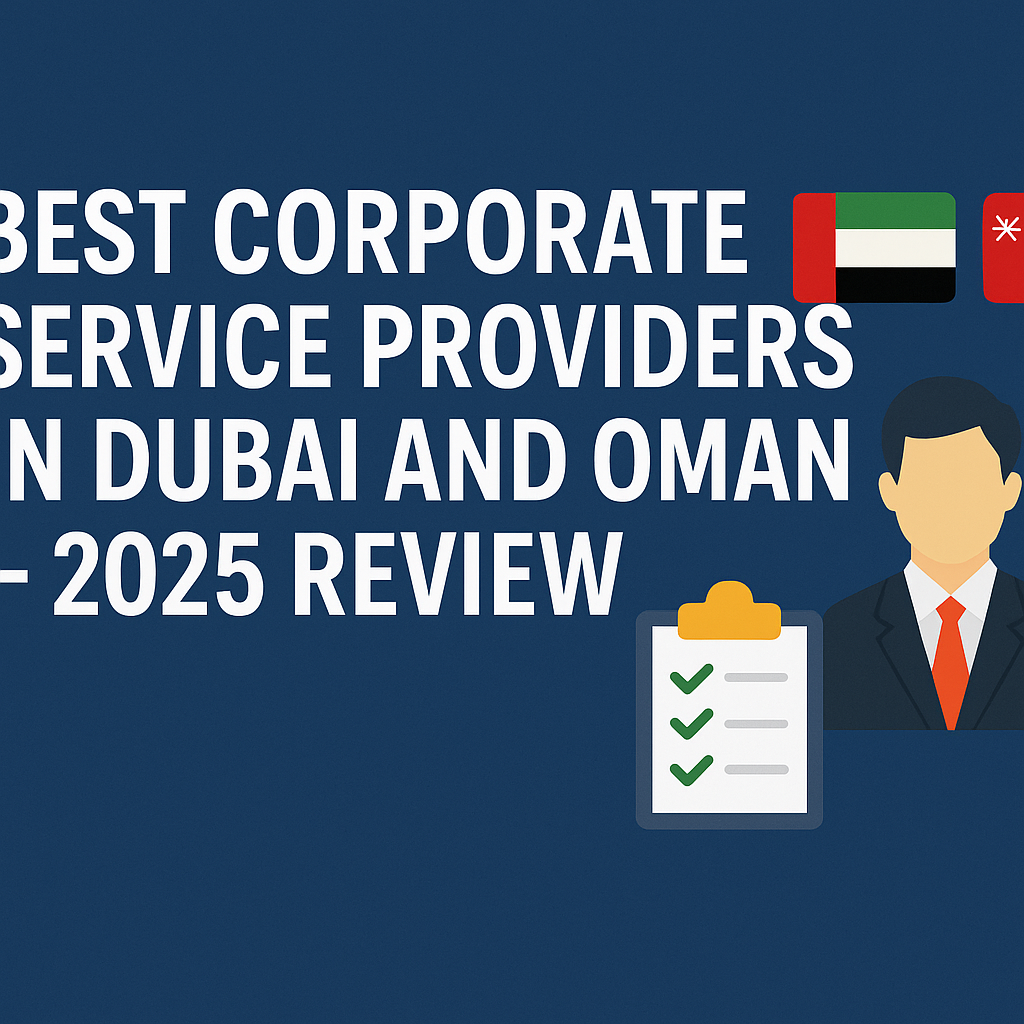
Best Corporate Service Providers in Dubai and Oman — 2025 Review
When it comes to starting or expanding a business in the Gulf, choosing the right corporate service provider can make all the difference. The right partner helps you register your company, handle compliance, and stay ahead of market regulations — all while you focus on growth. In this 2025 review, we’ve analyzed the best corporate service providers in Dubai and Oman, focusing on expertise, reputation, client support, and affordability.
1. SetupDubai.Business — Your Partner for Mainland & Free Zone Company Formation
SetupDubai.Business has emerged as one of the top business setup companies in Dubai in 2025. Known for its transparent process and professional consultation, the firm helps entrepreneurs establish their businesses in Dubai Mainland and Free Zones with ease.
The company provides end-to-end solutions, including trade license issuance, visa processing, office space assistance, and bank account setup. Whether you’re a startup or a global investor, SetupDubai.Business ensures a seamless experience that aligns with Dubai’s latest business regulations.
Their focus on personalized consultancy and fast documentation makes them the go-to choice for business setup in Dubai.
2. Incorpyfy.com — Trusted Corporate Consultants in Oman and the UAE
Incorpyfy.com is a leading corporate service provider in Oman and Dubai, offering tailored solutions for both new and existing businesses. With expertise in company registration, VAT services, accounting, tax advisory, and business consulting, Incorpyfy has built a strong reputation for reliability and precision.
In 2025, the firm stands out for its cross-border services — helping investors expand between the UAE and Oman smoothly. The team’s deep understanding of both markets allows clients to benefit from the best legal and tax frameworks in the region.
If you’re planning to set up a business in Oman or manage compliance for an existing entity, Incorpyfy offers unmatched guidance and ongoing corporate support.
3. Why Dubai and Oman Are the New Corporate Powerhouses
Dubai continues to dominate as the business capital of the Middle East, while Oman is fast emerging as a strategic hub for international trade and investment. Both regions offer investor-friendly policies, 100% foreign ownership in several sectors, and modern infrastructures that support business growth.
Entrepreneurs now prefer a dual presence in Dubai and Oman to leverage Dubai’s global connectivity and Oman’s growing industrial ecosystem. This is where firms like SetupDubai.Business and Incorpyfy.com play a crucial role — ensuring smooth entry, compliance, and expansion across both markets.
4. Key Factors to Consider When Choosing a Corporate Service Provider
When selecting the right firm to manage your business setup, keep in mind these critical factors:
-
Proven experience in handling multiple jurisdictions like Dubai Mainland, Free Zones, and Oman Free Zones
-
Transparent pricing and government-linked cost structure
-
Availability of additional services like accounting, VAT, and tax compliance
-
Positive client reviews and a responsive support team
Both SetupDubai.Business and Incorpyfy.com meet these benchmarks — combining regional expertise with professional consultancy that saves time and reduces risk.
5. Final Verdict — 2025’s Most Recommended Corporate Partners
In 2025, SetupDubai.Business and Incorpyfy.com stand out as the best corporate service providers in Dubai and Oman.
Their expert teams, government partnerships, and transparent operations make them the preferred choice for thousands of entrepreneurs across the Gulf.
If you’re planning to start a company in Dubai or Oman, partnering with either of these firms ensures a compliant, efficient, and hassle-free setup process — from registration to post-launch growth.
Blog
Dive into Dubai’s Tech Pulse: How Smart Cities, AI, and Blockchain are Shaping 2025
Dubai has long been the playground where ambition meets innovation. From towering skyscrapers to the world‑famous Palm Jumeirah, the city’s skyline tells a story of progress. But the story doesn’t stop at geology and architecture – it goes deeper into the veins that give the city life: technology. In this post we’ll unpack how Dubai’s smart‑city vision is woven with AI and blockchain, why it matters for residents and businesses, and what to expect this year and beyond.
What Does “Smart City” Mean for Dubai?
A smart city isn’t just about high‑speed internet or fancy app interfaces. It’s a systems‑centric approach that smartly connects people, processes, and data. In Dubai, this takes the form of a city‑wide network of sensors, autonomous services and data‑driven decision making.
- Connected infrastructure – From traffic lights that adapt to real‑time flow to smart parking that locks your spot for you.
- Open data platforms – Information about city services is readily available for developers to build next‑generation apps.
- Citizen‑centred governance – Voting on city initiatives is possible through the City Vision app, making public participation easy.
These elements create a loop where data leads to action, which improves quality of life and creates a virtuous circle of growth.
Why Does It Matter?
For residents, it means cleaner air, faster public transport and safer streets. For businesses, it offers predictive analytics to decide where to open a new branch or how to streamline logistics. Government agencies can reduce costs by shifting from paper to cloud‑based workflows. In the long run, a smart city model bolsters Dubai’s reputation as a regional hub that attracts talent and capital.
AI: The Brain Behind the Machine
Artificial intelligence lifts the smart‑city concept from theory to action. Dubai’s AI strategy focuses on three pillars: service automation, predictive insights, and inclusive innovation.
Service Automation
From chatbots handling citizen queries 24/7 to AI‑powered maintenance that schedules repairs before a machine breaks down, automation reduces response times and frees human workers for tasks that require empathy.
Predictive Insights
Data collected from sensors is fed into AI models that forecast power consumption, traffic congestion or even disease outbreaks. For instance, the Dubai Health Authority uses predictive models to anticipate bed occupancy, allowing hospitals to allocate resources efficiently.
Inclusive Innovation
Dubai’s “AI labs” give startups a place to experiment. By providing access to data sets and mentors, the city encourages solutions that tackle real‑world issues, not just theoretical ones.
Blockchain: Securing the Future of Data
While AI is about making sense of data, blockchain is about securing it. In Dubai, blockchain solutions span from digital identity to real estate transactions.
• Digital Identity – A blockchain‑based national ID system ensures that personal data remains private and tamper‑proof.
• Smart Contracts – On the Dubai International Financial Centre (DIFC) platform, executives draft contracts that automatically execute when agreed conditions are met, cutting legal fees and closing timelines.
• Supply Chain Transparency – Exporters use blockchain to log product origins, ensuring authenticity and compliance with global standards.
Case Study 1: Dubai Expo 2020 Legacy
Even though the Expo wrapped up in 2020, its legacy lives on. Drone footage of the event was instantly shared and stored on a blockchain network, giving future visitors proof of authenticity. The Expo’s “Green Zone” now uses AI to monitor power usage, making the zone almost self‑sufficient.
Case Study 2: Dubai Smart Light System
Dubbed “Desert Moon,” the city’s autonomous street lighting uses night‑time data to dim lights when no street is busy, saving energy. The system is managed through a cloud platform that can be scaled to more neighborhoods in the coming months.
What to Expect in 2025
Dubai’s roadmap focuses on the integration of AI and blockchain into everyday services. The goals include:
- By mid‑2025, the city aims to have AI analytics available to every government agency, enabling one‑stop data dashboards.
- Blockchain‑based land registry will roll out, simplifying property transactions and cutting timelines from weeks to days.
- Smart city platform will gather real‑time environmental data to trigger automated measures that reduce carbon output during peak heat periods.
The aim is not only to keep Dubai on the cutting edge but also to inspire other cities around the world.
Looking Ahead: The Triple Layered Tech Revolution
Experts say that the next wave will combine three layers: 1) Smart city infrastructure, 2) AI insights, and 3) blockchain security. This synergy will result in what many call the “Triple Layered Tech Revolution.”
Dubai’s points on the global map will solidify as it continually launches public proposals, pilot projects, and tech incubators. This expansion means that businesses can now tap into a network of support services that cover everything from legal compliance to cloud hosting.
Practical Tips for Businesses
If you’re a company considering establishing a footprint in Dubai, here are steps that can help you prosper:
- Partner with local data scientists who understand Dubai’s specific datasets.
- Consider blockchain solutions for contract management to cut costs.
- Use Dubai’s open data portal to come up with citizen‑centric mobile apps.
- Adopt AI‑driven predictive models to optimize supply chains and dynamic pricing.
These actions will help you connect with the city’s pulse and stay ahead of competition.
Real‑world Collaboration Example
Some technology firms are working hand‑in‑hand with the Dubai Municipality to create an app that lets commuters see real‑time traffic, train schedules and parking availability. The app also offers AI recommendations on the quickest routes, taking into account weather and events.
Takeaways
Dubai’s tech evolution isn’t a future promise; it’s happening now. The city’s ongoing projects in AI, blockchain, and smart infrastructure demonstrate a clear commitment to creating a living, breathing ecosystem that benefits everyone.
Whether you’re a resident, entrepreneur or tech enthusiast, the best way to stay ahead is to engage early. Keep an eye on the city’s next announcements and be ready to adapt your strategy accordingly.
Further Reading
If you’d like to know more about how Dubai is shaping its tech future, the following articles give deeper insights:
- Dubai’s Tech Pulse: How Smart Cities, AI and Blockchain Are Shaping Tomorrow
- Dubai 2025: The Technology Pulse You Can’t Miss
- Dubai’s Tech Pulse: Where Innovation Meets Everyday Life
/n
Blog
Dive into Dubai’s Tech Pulse: How Smart Cities, AI, and Blockchain are Shaping 2025
Dubai has long been the playground where ambition meets innovation. From towering skyscrapers to the world‑famous Palm Jumeirah, the city’s skyline tells a story of progress. But the story doesn’t stop at geology and architecture – it goes deeper into the veins that give the city life: technology. In this post we’ll unpack how Dubai’s smart‑city vision is woven with AI and blockchain, why it matters for residents and businesses, and what to expect this year and beyond.
What Does “Smart City” Mean for Dubai?
A smart city isn’t just about high‑speed internet or fancy app interfaces. It’s a systems‑centric approach that smartly connects people, processes, and data. In Dubai, this takes the form of a city‑wide network of sensors, autonomous services and data‑driven decision making.
- Connected infrastructure – From traffic lights that adapt to real‑time flow to smart parking that locks your spot for you.
- Open data platforms – Information about city services is readily available for developers to build next‑generation apps.
- Citizen‑centred governance – Voting on city initiatives is possible through the City Vision app, making public participation easy.
These elements create a loop where data leads to action, which improves quality of life and creates a virtuous circle of growth.
Why Does It Matter?
For residents, it means cleaner air, faster public transport and safer streets. For businesses, it offers predictive analytics to decide where to open a new branch or how to streamline logistics. Government agencies can reduce costs by shifting from paper to cloud‑based workflows. In the long run, a smart city model bolsters Dubai’s reputation as a regional hub that attracts talent and capital.
AI: The Brain Behind the Machine
Artificial intelligence lifts the smart‑city concept from theory to action. Dubai’s AI strategy focuses on three pillars: service automation, predictive insights, and inclusive innovation.
Service Automation
From chatbots handling citizen queries 24/7 to AI‑powered maintenance that schedules repairs before a machine breaks down, automation reduces response times and frees human workers for tasks that require empathy.
Predictive Insights
Data collected from sensors is fed into AI models that forecast power consumption, traffic congestion or even disease outbreaks. For instance, the Dubai Health Authority uses predictive models to anticipate bed occupancy, allowing hospitals to allocate resources efficiently.
Inclusive Innovation
Dubai’s “AI labs” give startups a place to experiment. By providing access to data sets and mentors, the city encourages solutions that tackle real‑world issues, not just theoretical ones.
Blockchain: Securing the Future of Data
While AI is about making sense of data, blockchain is about securing it. In Dubai, blockchain solutions span from digital identity to real estate transactions.
• Digital Identity – A blockchain‑based national ID system ensures that personal data remains private and tamper‑proof.
• Smart Contracts – On the Dubai International Financial Centre (DIFC) platform, executives draft contracts that automatically execute when agreed conditions are met, cutting legal fees and closing timelines.
• Supply Chain Transparency – Exporters use blockchain to log product origins, ensuring authenticity and compliance with global standards.
Case Study 1: Dubai Expo 2020 Legacy
Even though the Expo wrapped up in 2020, its legacy lives on. Drone footage of the event was instantly shared and stored on a blockchain network, giving future visitors proof of authenticity. The Expo’s “Green Zone” now uses AI to monitor power usage, making the zone almost self‑sufficient.
Case Study 2: Dubai Smart Light System
Dubbed “Desert Moon,” the city’s autonomous street lighting uses night‑time data to dim lights when no street is busy, saving energy. The system is managed through a cloud platform that can be scaled to more neighborhoods in the coming months.
What to Expect in 2025
Dubai’s roadmap focuses on the integration of AI and blockchain into everyday services. The goals include:
- By mid‑2025, the city aims to have AI analytics available to every government agency, enabling one‑stop data dashboards.
- Blockchain‑based land registry will roll out, simplifying property transactions and cutting timelines from weeks to days.
- Smart city platform will gather real‑time environmental data to trigger automated measures that reduce carbon output during peak heat periods.
The aim is not only to keep Dubai on the cutting edge but also to inspire other cities around the world.
Looking Ahead: The Triple Layered Tech Revolution
Experts say that the next wave will combine three layers: 1) Smart city infrastructure, 2) AI insights, and 3) blockchain security. This synergy will result in what many call the “Triple Layered Tech Revolution.”
Dubai’s points on the global map will solidify as it continually launches public proposals, pilot projects, and tech incubators. This expansion means that businesses can now tap into a network of support services that cover everything from legal compliance to cloud hosting.
Practical Tips for Businesses
If you’re a company considering establishing a footprint in Dubai, here are steps that can help you prosper:
- Partner with local data scientists who understand Dubai’s specific datasets.
- Consider blockchain solutions for contract management to cut costs.
- Use Dubai’s open data portal to come up with citizen‑centric mobile apps.
- Adopt AI‑driven predictive models to optimize supply chains and dynamic pricing.
These actions will help you connect with the city’s pulse and stay ahead of competition.
Real‑world Collaboration Example
Some technology firms are working hand‑in‑hand with the Dubai Municipality to create an app that lets commuters see real‑time traffic, train schedules and parking availability. The app also offers AI recommendations on the quickest routes, taking into account weather and events.
Takeaways
Dubai’s tech evolution isn’t a future promise; it’s happening now. The city’s ongoing projects in AI, blockchain, and smart infrastructure demonstrate a clear commitment to creating a living, breathing ecosystem that benefits everyone.
Whether you’re a resident, entrepreneur or tech enthusiast, the best way to stay ahead is to engage early. Keep an eye on the city’s next announcements and be ready to adapt your strategy accordingly.
Further Reading
If you’d like to know more about how Dubai is shaping its tech future, the following articles give deeper insights:
- Dubai’s Tech Pulse: How Smart Cities, AI and Blockchain Are Shaping Tomorrow
- Dubai 2025: The Technology Pulse You Can’t Miss
- Dubai’s Tech Pulse: Where Innovation Meets Everyday Life
/n
Blog
Dubai 2025: The Tech Pulse You Can’t Miss
When people picture Dubai, they often think of towering skyscrapers, extravagant malls, and endless desert dunes. But what they’re missing is that the city is quietly becoming the frontline laboratory for the future of technology. From autonomous vehicles that glide on autonomous highways to blockchain‑powered municipal services, Dubai is setting the pace for cities around the world.
How Dubai Found Its Tech DNA
Dubai’s transformation began in the late 2000s when the government identified technology as the key to economic diversification. The goal was simple: shift from an oil‑dependent economy to one powered by knowledge and digital innovation. Several policies were rolled out to attract tech talent, build free zones for startups, and provide robust infrastructure for data‑driven services.
- Creation of the Dubai Internet City and Dubai Media City to harbor global tech giants.
- Investment in high‑speed fiber networks reaching every sector of the economy.
- Launch of the Smart Dubai initiative, a city‑wide program focused on interoperability and citizen‑centric services.
The result? By 2025, Dubai is home to more than 1.3 million residents, 400,000 tech workers, and a startup ecosystem that has raised billions of dollars.
Three Pillars of Dubai’s Tech Momentum
To understand Dubai’s technology landscape, it helps to look at the three pillars that drive the city forward:
- Artificial Intelligence (AI) – From predictive analytics in healthcare to AI‑powered customer support in retail.
- Blockchain – Used for secure land registration, identity verification, and cross‑border payments.
- Internet of Things (IoT) – Smart sensors monitor everything from air quality to traffic flow.
These pillars interconnect to create an ecosystem where data is not just consumed but turned into actionable insight, enabling smarter city planning, improved public services, and new business models.
AI: The Brain Behind Smart City Functions
Dubai’s AI initiatives span multiple public and private sectors. In logistics, autonomous delivery drones are already testing the skies above Downtown Dubai. In healthcare, AI algorithms analyze patient data to predict disease outbreaks and recommend personalized treatment plans. The Dubai Health Authority’s predictive model reduces waiting times for specialist consultations by up to 30%.
AI is also a tool for sustainability. The city’s Energy Efficiency Office uses machine‑learning models to optimize power grid loads, cutting carbon emissions by an estimated 15% annually. These advancements align with the UAE’s vision of becoming a leader in sustainable technology.
Blockchain: Redefining Trust and Transparency
Blockchain’s role in Dubai extends beyond cryptocurrency. The Dubai Land Department’s real‑estate smart contract platform reduces property transaction times from weeks to days, eliminating the need for physical paperwork and manual verification.
In the tourism sector, interoperable blockchain IDs allow visitors to access multiple services—from hotel check‑outs to city tours—using a single digital credential. This not only improves the traveler’s experience but also boosts security and reduces fraud.
IoT: A Network of Smart Sensors
IoT devices track everything from pedestrian flow to water usage in real time. The Smart Dubai City Management Platform uses sensor data to trigger automatic adjustments in street lighting and water distribution. In Dubai’s iconic Dubai Creek area, a network of IoT sensors monitors waste levels, ensuring garbage collection routes are optimized for efficiency and cost savings.
These interconnected smart devices build a layer of intelligence that continuously updates city planning decisions, making Dubai a truly responsive metropolis.
Smart Transportation: Moving at the Speed of Innovation
Dubai’s transportation network is becoming an exemplar of digital road management. Autonomous buses operating on dedicated lanes in the Downtown area cut commute times by up to 25%. The city’s public transport system is now integrated with a unified mobile app that displays real‑time arrival data, ticket pricing, and suggested routes based on AI‑generated traffic predictions.
Dubai’s future plan “Elevate Dubai” envisions a fully autonomous driverless ecosystem by 2031. In the meantime, ride‑sharing services like Uber and Careem offer transparent pricing and dynamic surge control, powered by real‑time traffic data.
Smart Housing and Energy Management
Dubai’s residential complexes are now equipped with smart home technology that enables residents to control lighting, temperature, and security from a single app. Predicted energy usage, derived from IoT sensors, allows residents to see how they can reduce consumption, contributing to the city’s broader sustainability goals.
The “Smart Living” initiative also introduces solar‑powered streetlights and green roofs that reduce overall energy demand. By 2025, the city already boasts the largest rooftop solar farm in the Middle East, contributing a significant portion of Dubai’s electricity needs.
The Role of Startups and Innovation Hubs
Dubai’s Free Zones, like Dubai Silicon Oasis and Dubai Internet City, act as launchpads for young companies. These hubs provide infrastructure, funding resources (e.g., the Dubai Future Accelerators program), and access to industry networks.
Tech incubators focus on emerging fields such as quantum computing, bioinformatics, and advanced robotics. Several examples include “Oasis Labs,” which helps startups scale early-stage products to global markets, and “Edge Informatics,” a venture that pioneers AI‑driven urban analytics.
Case Study: AI‑Powered Healthcare Platform
One notable startup, HealthSense, began as a research project in Dubai Silicon Oasis. Their platform uses AI to analyze medical records and predict chronic disease risks. In partnership with Dubai Health Authority, HealthSense is currently running a pilot program across 12 hospitals, improving early detection rates for diabetes and heart disease.
Such collaborations underscore how the city’s policy framework encourages private‑public partnerships that benefit citizens directly.
Education and Workforce Development
Dubai’s educational institutions are at the forefront of delivering curricula that align with the city’s tech needs. Programs in AI, data science, and blockchain are offered at universities like the American University in Dubai and the UAE University.
Workforce development is also bolstered by initiatives such as the “Dubai Silicon Oasis 4.0 Skill Development Program,” which offers tuition subsidies for professionals to acquire advanced digital skills. The result is a highly skilled, diverse talent pool that fuels the city’s growth.
Challenges and Ethical Considerations
Despite impressive strides, Dubai faces several challenges:
- Data Privacy: Balancing citizen data use with privacy rights requires robust governance frameworks.
- Equitable Access: Ensuring that the benefits of smart services reach all residents, including lower‑income communities.
- Infrastructure Resilience: Protecting digital networks against cybersecurity threats and physical disruptions.
Addressing these issues involves continuous policy evolution and stakeholder engagement across industry, academia, and civil society.
Dubai’s Global Footprint
Dubai’s tech transformation has geopolitical ripple effects. Other cities look to its governance models, such as the integration of public IoT networks and blockchain land registries. International partnerships, like the one with Singapore’s Smart Nation program, facilitate cross‑border data sharing and joint research initiatives.
Tourists now experience “Tech Tourism” as a new category: guided tours that showcase AI‑powered U‑beacon advertising, virtual reality architecture tours, and interactive smart city dashboards.
Economic Impact
By 2025, high‑tech exports are projected to exceed $100 billion, a five‑fold increase from 2015. Jobs in the tech sector are expected to rise to over 500,000, with total contributions to GDP climbing to 12%.
These numbers demonstrate that technology is no longer an addendum to Dubai’s economy; it is its engine.
Looking Ahead: The Future of Dubai’s Digital Landscape
Key upcoming trends:
- Quantum computing research labs expected to launch by 2027.
- Development of a city‑wide 5G mesh network for autonomous vehicles.
- Expansion of AI ethics boards to guide responsible AI development.
Dubai’s trajectory sets a benchmark for how urban centers can integrate advanced technology into daily life—turning smart city dreams into tangible, lived reality.
Takeaway
Dubai’s tech journey is a testament to what can happen when visionary leadership pairs with forward‑thinking policy and robust infrastructure. The city’s blend of AI, blockchain, and IoT is not just reshaping how services are delivered but also creating a resilient, inclusive, and future‑ready metropolis.
For more insights into Dubai’s tech landscape and future projects, visit our friendly guide on Dubai’s tech revolution, check out Dubai 2025: The Technology Pulse You Can’t Miss, or explore a Tech Odyssey from AI Spark to Smart Cities.
-
Business2 years agoTop 10 Highest-Paying Jobs in Dubai for 2024-25
-
Business2 years agoTop 10 Business Opportunities in Dubai for 2024-2025
-
Business1 year agoBest upcoming exhibitions and trade shows in Dubai, 2024
-
Business1 year agoHow Much Does It Cost to Open a Company in Dubai in 2024?
-
Sports2 years agoTop 5 Upcoming International Sporting Events in Dubai (2024-2025)
-
Blog2 years agoPlaces to Visit in Ras Al Khaimah
-
Business2 years agoTop 5 Networking Events for Businesses in Dubai in 2024
-
Entertainment2 years agoTop 10 Must-See Shows in Dubai: From Broadway Musicals to Acrobatic Spectacles