Blog
How Can Exhibition Stand Builders in Oman Elevate Your Brand?
Introduction
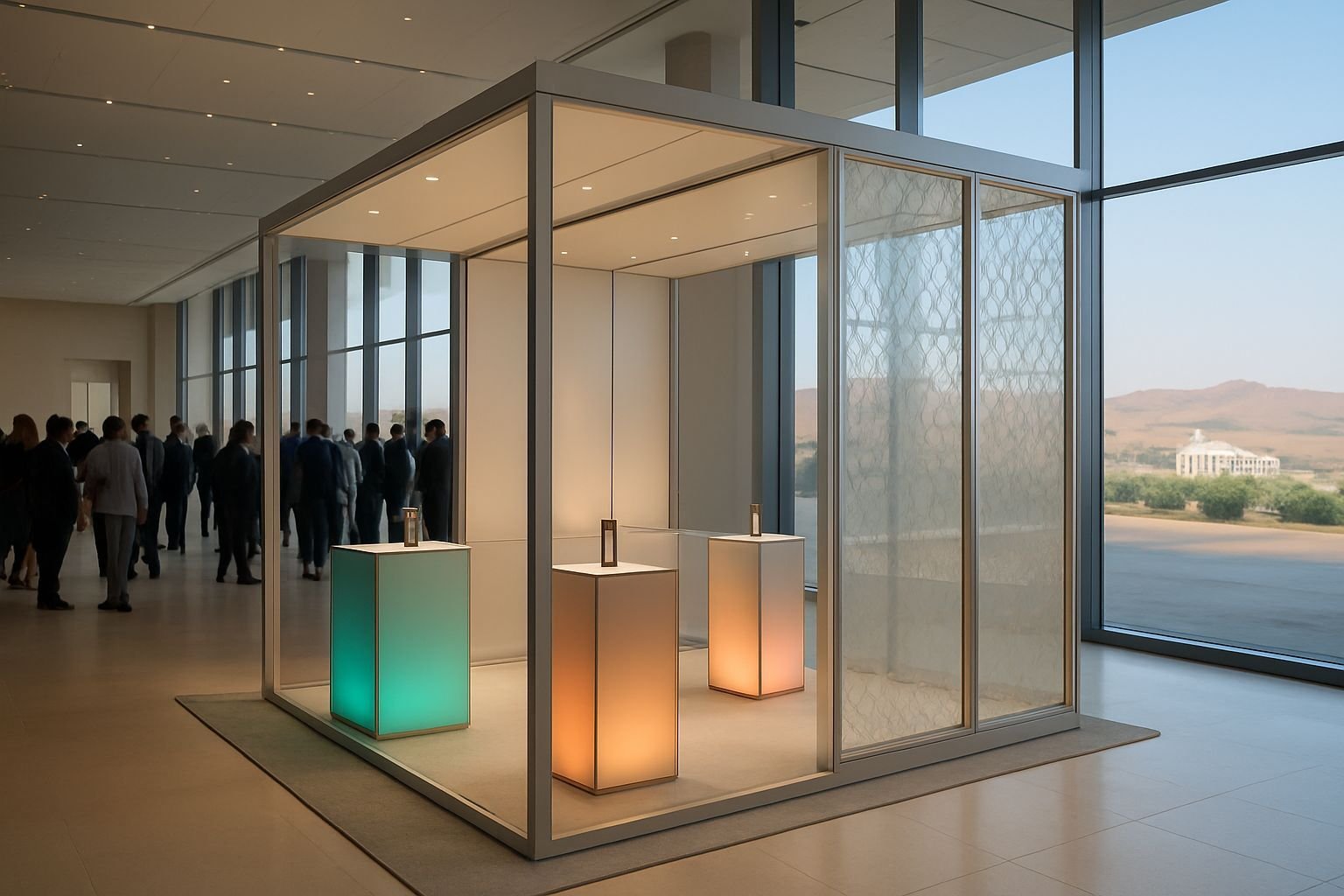
Exhibitions and trade shows have become essential platforms for companies to showcase products, connect with customers, and explore new markets. The visual impact of a booth often determines how many visitors stop, engage, and remember a brand. For this reason, the expertise of professional exhibition stand builders is crucial. Their ability to translate brand messaging into a three‑dimensional experience can elevate an organization’s presence among dozens of competing displays. This article explores the functions of exhibition stand builders, the criteria for selecting a reliable partner, and the trends shaping the industry in Oman.
Understanding the Role of Exhibition Stand Builders
Exhibition stand builders combine design, engineering, and project management to deliver functional, attractive, and compliant booths. Their work begins with a concept that aligns with marketing objectives and ends with a finished structure ready for installation and dismantling. Throughout the process, they must balance aesthetics, durability, budget constraints, and logistical considerations such as shipping and on‑site assembly.
Key Responsibilities
- Interpreting client briefs and translating them into spatial layouts.
- Creating detailed technical drawings and 3‑D renderings.
- Sourcing sustainable materials, lighting, graphics, and interactive technology.
- Coordinating with vendors, fabricators, and venue authorities.
- Managing timelines, transportation, on‑site construction, and post‑event teardown.
Materials and Technologies
Modern exhibition stands rely on a mix of lightweight aluminum frames, modular panels, high‑resolution printed graphics, and digital displays. Sustainable options such as recyclable plastics, bamboo, and reusable modular components are gaining popularity, especially among environmentally conscious brands. Advanced lighting systems, augmented reality (AR) experiences, and touch‑screen kiosks add interactivity, while structural engineering software ensures safety and compliance with local regulations.
Choosing the Right Contractor in Oman
When a company decides to exhibit in Muscat, Salalah, or any other Omani venue, the selection of a local contractor can simplify logistics and reduce costs. A contractor familiar with regional trade‑show regulations, customs procedures, and venue specifications will anticipate challenges before they arise. They also maintain relationships with local suppliers, which can expedite material procurement.
For businesses seeking a partner that offers end‑to‑end solutions, the phrase Exhibition stand builders in Oman often appears in industry directories. These firms typically provide concept development, design, fabrication, and on‑site services under one roof, ensuring consistency and reducing the need for multiple vendors.
Evaluating Experience and Portfolio
A robust portfolio demonstrates a contractor’s ability to handle diverse project sizes and themes. Reviewing case studies, photographs, and client testimonials helps gauge creativity, technical skill, and reliability. Companies should ask for references from previous clients who exhibited in similar venues, such as the Oman International Trade Fair or the Gulf Food Exhibition.
Assessing Project Management Capabilities
Effective project management is vital for meeting tight exhibition deadlines. Contractors should outline clear milestones, provide regular progress updates, and have contingency plans for unexpected delays. Transparent communication channels—often supported by dedicated project managers—ensure that any design changes or logistical issues are addressed promptly.
Design Considerations for a Memorable Booth
Beyond structural integrity, the visual and experiential aspects of a booth determine visitor engagement. Designers focus on brand consistency, clear messaging, and a layout that encourages traffic flow. Key elements include:
- Branding: Large‑format graphics, color schemes, and signage that reflect corporate identity.
- Lighting: Ambient, accent, and task lighting that highlights products and creates mood.
- Interactive Zones: Demo stations, VR experiences, or product sampling areas.
- Comfort: Seating, charging stations, and clear wayfinding to keep visitors longer.
Integrating Technology
Technology enhances storytelling. Touch‑screen catalogs, live social‑media feeds, and QR code integrations allow visitors to access information instantly. When selecting a builder, it is helpful to confirm that they have experience integrating these systems without compromising structural stability.
Logistics and On‑Site Execution
Logistical planning begins months before the exhibition date. It involves shipping components, arranging customs clearance, and scheduling installation crews. In Oman, many venues require pre‑approval of booth dimensions and safety certifications. A competent contractor will submit detailed plans to the venue authority, secure necessary permits, and coordinate with local freight forwarders.
Companies that partner with an Exhibition stand contractors in Oman often benefit from their knowledge of local loading dock schedules and venue access restrictions. This expertise minimizes the risk of delayed installation and ensures that the booth is ready for the opening day.
Installation Best Practices
On the day of installation, the crew follows a systematic sequence: unpacking, structural assembly, graphics placement, technology setup, and final inspections. Safety checks include securing all load‑bearing elements, verifying electrical connections, and testing interactive displays. A final walkthrough with the client confirms that the booth meets expectations before the public arrives.
Sustainability Trends in Exhibition Design
Environmental responsibility is increasingly important for exhibitors. Sustainable booth design focuses on reducing waste, using recyclable materials, and designing for reusability. Some builders offer modular systems that can be reconfigured for future events, eliminating the need for new fabrication each time.
Organizations looking for a partner that prioritizes green solutions may search for an Exhibition stand design company in Oman. These firms often provide lifecycle assessments, carbon‑footprint calculations, and recommendations for eco‑friendly finishes.
Case Study: Reusable Modular Booths
One recent exhibition featured a modular booth system constructed from aluminum frames and fabric panels. After the event, the components were disassembled, stored, and later re‑used for a different trade show, reducing material waste by 70 percent. The builder’s ability to design interchangeable modules contributed to cost savings and a lower environmental impact.
Cost Management Without Compromising Quality
Budget constraints are common, especially for small and medium‑sized enterprises. Effective cost management involves prioritizing high‑impact elements—such as striking graphics and interactive technology—while using cost‑effective construction methods for the structural framework. Transparent quotations that break down material, labor, and logistics costs help clients make informed decisions.
When exploring options, some businesses turn to an Exhibition booth design company in Oman that offers tiered service packages. These packages range from basic modular stands to fully custom, high‑tech experiences, allowing exhibitors to select the level of investment that aligns with their objectives.
Ensuring Compliance and Safety
Compliance with local building codes, fire safety regulations, and venue-specific rules is non‑negotiable. Builders must provide documentation such as structural calculations, material safety data sheets, and electrical certifications. Failure to meet these standards can result in fines or the removal of the booth during the event.
Partnering with an experienced Exhibition booth builder in Oman can simplify the compliance process. Their familiarity with Omani regulations ensures that all necessary approvals are obtained well before the exhibition opens.
Risk Mitigation Strategies
Risk mitigation includes insurance coverage for damage, contingency plans for power outages, and backup equipment for critical technology. Builders often recommend redundant power supplies for digital displays and provide on‑site technical support throughout the exhibition period.
Future Outlook for Exhibition Stand Construction
The exhibition industry continues to evolve with emerging trends such as hybrid events, immersive storytelling, and data‑driven visitor analytics. Builders who invest in adaptable designs and digital integration will be better positioned to meet the demands of both physical and virtual audiences.
- Hybrid Booths: Combining physical displays with live streaming and virtual tours.
- Data Capture: Sensors and QR codes that collect visitor metrics for post‑event analysis.
- Personalization: Dynamic graphics that change based on real‑time audience data.
Conclusion
Choosing the right exhibition stand builder in Oman involves evaluating experience, design capability, logistical expertise, and commitment to sustainability. By focusing on these criteria, companies can create booths that attract attention, convey brand messages effectively, and operate safely within venue guidelines. The collaborative effort of skilled builders, designers, and project managers ultimately shapes a memorable exhibition experience. For those seeking a partner that embodies these qualities, Standsbay offers a proven track record of delivering innovative and reliable exhibition solutions.
Blog
Dubai’s Digital Pulse: A Journey Through the City’s Technology Landscape
Dubai isn’t just a glittering metropolis with skyscrapers that touch the clouds; it’s also a thriving hub where technology transforms everyday life and redefines what it means to live in a city. From smart traffic lights to AI‑driven utilities, the transformation is happening at a breakneck pace. In this post we’ll walk through the key forces driving Dubai’s tech revolution, show how the city’s infrastructure and policies play a pivotal role, and highlight opportunities for innovators, entrepreneurs, and curious visitors who want to be part of this digital future.
Why Dubai is a Hotspot for Tech Innovators
Dubai’s vision is set on becoming a global city of the future. The blend of an open‑air economy, a business‑friendly regulatory environment, and a high concentration of skilled talent makes it a natural magnet for tech ventures. The government’s emphasis on “one‑stop” licensing, low corporate tax rates, and strategic partnerships with leading global corporations gives newcomers a clear advantage.
Beyond the financial perks, there is an ingrained culture of embracing change. Unlike many capitals that cling to tradition, Dubai’s leadership actively encourages trial and error. Smart pilots, like the autonomous drones that deliver parcels across the city, usually start with small pilot projects that can quickly scale if they prove successful. This iterative mindset keeps the ecosystem dynamic and responsive.
Tech Entrepreneurs’ Hot Corners
Industry clusters, such as Dubai Internet City and Dubai Media City, host thousands of startups. Incubators and accelerators such as Explore Dubai: A Guide to the City’s Tech Revolution provide office space, mentorship, and access to investors who are eager to tap into the region’s burgeoning potential.
Beyond guitars and keyboards, we see a surge in “green tech” startups tackling climate resilience, along with “health tech” ventures providing remote diagnostics and AI‑enabled predictive care. This diversity means there is always a niche waiting to be explored.
Smart City Architecture: From Vision to Reality
Dubai’s “Smart City” blueprint is a comprehensive asset management system that ties together everything from energy consumption to traffic flows. The goal is to create a city where data drives smart decisions.
Connected Streetlights and Real‑Time Analytics
One of the most visible examples is the city’s network of connected streetlights. Each lamp is a sensor that measures air quality, moisture levels, and light intensity. Data from these sensors is routed to a central platform where city planners can quickly spot issues, for instance, a sudden rise in pollutants in a particular sector or a pothole forming under a vacant parking spot.
Mobility as a Service (MaaS)
Dubai’s transportation ecosystem is shifting from ride‑hailing to integrated MaaS solutions. A single app now lets you book a bike, switch to a bus, or hail a self‑driving taxi. Hardware such as e‑infrastructure charging stations for electric vehicles seamlessly become part of this ecosystem. The smart infrastructure not only boosts convenience but also helps reduce emissions.
Waste Management and Circular Economy
Smart bins equipped with weight sensors and voice alerts make recycling efficient. Residents receive notifications to schedule pickups when bins are full, eliminating half‑filled rubbish. On a larger scale, businesses are using AI to optimize waste segregation, leading to higher recycling rates and lower landfill use.
The Rise of AI and Blockchain in Everyday Life
Artificial Intelligence and blockchain technology have woven themselves into the fabric of everyday Dubai life, offering new tools for service delivery, security, and transparency.
AI‑Enabled Customer Service
Many government services now use chatbots powered by natural language processing. Residents can ask about utility usage, apply for a permit, or report a municipal issue without ever stepping into a government office. These AI assistants are available 24/7 and adapt to local dialects, ensuring smooth communication.
Blockchain for Transparency
Dubai’s approach to blockchain isn’t limited to cryptocurrency. The city’s “Dubai Blockchain Strategy” uses distributed ledger technology to record everything from property titles to health records. When a new building is constructed, its information is logged on a blockchain, guaranteeing permanent record integrity and eliminating fraud.
Predictive Maintenance for Infrastructure
AI algorithms analyze sensor data to forecast equipment failures in real‑time. For example, in the transportation network, predictive maintenance can alert engineers before a traffic light malfunctions, saving mobilised repair costs and ensuring minimal disruption to commuters.
Take a Closer Look With These Resources
To dig deeper into how AI and blockchain reshape Dubai’s daily life, Dubai’s Tech Revolution: AI and Blockchain offers a detailed exploration of these technologies. For a broader perspective on the city’s technology evolution, see Dubai Tech Pulse: Building Tomorrow with Tech Today.
Tech Infrastructure: Connectivity, Data, and Innovation Hubs
High‑speed connectivity is a static pillar of Dubai’s tech readiness. With a fiber‑optic backbone laid across the city, data transfer rates are amongst the fastest worldwide.
5G Rollout and Edge Computing
While 5G promises low‑latency, high‑throughput for smartphones and IoT devices, edge nodes are being set up strategically across the city to reduce data transmission time. This is crucial for real‑time applications in autonomous vehicles, drone deliveries, and smart factories.
Data Centers and Cloud Platforms
Dubai houses several Tier‑4 data centers that comply with the highest security standards. Cloud services are now easily accessible, enabling startups and enterprises to deploy applications globally with low latency and high reliability.
Cybersecurity Measures
The rapid pace of digital transformation requires robust security. Dubai’s cybersecurity policy adopts multi‑layered defense with encryption, identity management, and continuous monitoring. The city also encourages the development of local cybersecurity talent through partnerships with academic institutions.
Startups and Incubators Lighting the Way
Dubai’s startup scene is not only growing in numbers but also in maturity. Today, a startup can scale from a home office using a shared co‑working space to securing multi‑million‑dollar funding within a year.
MoMo8 and Dubai Future Accelerators
MoMo8, for example, hosts 100+ startups that solve real‑world challenges. Dubai Future Accelerators partners with the government to provide focused pitch sessions, mentorship, and direct access to senior decision makers.
Industry Focus: FinTech, HealthTech, CleanTech
FinTech firms are pioneering open banking, while HealthTech startups integrate AI diagnostics into telemedicine. CleanTech ventures, often backed by municipal funds, look into renewable energy storage solutions and carbon footprint reduction technologies.
Success Stories
A local app that guides users to the nearest charging station for electric vehicles has raised $3 million in Series A funding and partnered with +20% of the UAE’s fleet. These stories demonstrate that Dubai’s innovation ecosystem rewards practical, locally relevant solutions.
Government Support and Policies That Build the Future
Dubai’s government mantra is simple: “innovation for all.” Therefore, public‑private partnerships are designed to test new ideas, lean on pilot projects, and incorporate citizen feedback.
Regulatory Sandboxes
These allow companies to experiment with regulated products in controlled environments. For instance, a blockchain‑based property registration tool can be ironed out behind a sandbox before a full rollout.
Incentivized Grants and Tax Benefits
Firms that develop AI or clean energy technologies can receive grants up to 40% of their R&D costs and qualify for zero corporate tax for five years.
Digital Residency
Dubai’s e‑Residency program, giving foreigners a digital passport to do business online, encourages startups and freelance professionals to base themselves in Dubai and tap into its connected economy.
Real‑World Applications You’re Already Using
Many of the city’s residents and visitors get to experience these technologies daily, often without realizing it.
Smart Parking System
Next‑door notifications let drivers know if a parking spot is free, updated in real time. When a spot suddenly becomes available, the system automatically assigns it to the nearest driver’s app.
Operation BEE (Building Energy Efficiency)
Buildings in Dubai use smart sensors to dim lights, close blinds, and adjust HVAC based on occupancy and daylight. Furthermore, performance data is shared with an Energy Management Center that directs future upgrades.
Dubai’s All‑In‑One App: Umm Al Qirā’ (or simply “Q”)
Residents can request city services, pay bills, and access public transport schedules from one interface. Because the app knows your home location, it can schedule trash pickups for you or recommend nearby electric bike rentals.
What the Next Decade Holds for Dubai’s Tech Scene
Over the next ten years, Dubai envisions a fully autonomous city where vehicles move without drivers, home appliances monitor health metrics, and the city can self‑repair through predictive maintenance.
Energy Independence & Solar Ambitions
Dubai aims to power 75% of its electricity from renewable sources like solar. Coupled with AI‑managed micro‑grids and battery storage, the city will reduce its carbon footprint significantly.
Metaverse and Digital Twins
Digital twins of Dubai’s infrastructure will allow planners to test changes before executing them in the real world, reducing costs and increasing accuracy.
AI Governance and Ethics
Dubai is working on transparent AI governance frameworks to ensure decisions align with societal values and protect user privacy.
Getting Involved: How You Can Be Part of the Movement
Whether you’re a developer, an investor, an academic, or a curious traveler, you can engage with Dubai’s tech ecosystem. Here are several ways to get involved:
- Attend Hackathons and Meetups – Events such as “Dubai Hackathon 2025” bring together talent to solve challenges in health, mobility, and sustainability.
- Apply for accelerators – Programs like the Dubai Future Accelerators or MoMo8 provide mentorship and funding.
- Volunteer in Tech Education – Help teach coding to youth in community centers to build a local talent pipeline.
- Invest in Early‑Stage Startups – Participate in syndicate deals or angel networks focused on UAE technology companies.
- Explore Career Opportunities – Tech companies offering AI, cloud, IoT, and cybersecurity roles are hiring groups of talent. Dubai’s immigration program also makes relocating easier.
By putting your skills and resources into these channels, you are not just contributing a solution, you’re shaping a city that clicks to the rhythm of its own digital heartbeat.
Dubai’s technology pulse is relentless and inclusive. It invites you to explore, learn, and innovate. Dive deeper into Dubai’s mission with this guide to the city’s tech revolution, or continue reading through the subsequent articles to understand how each piece of the puzzle fits together. The future is here – it’s just waiting for your next step.
Blog
Dubai’s 2025 Tech Roadmap: From AI‑Driven Smart Cities to Blockchain Innovations
Dubai has always been a city that looks toward the future. From its iconic skyline to its world‑famous events, the emirate is built on bold ambitions. Now, technology is the engine that will keep that ambition moving forward. In this post we’ll explore the specific ways Dubai is turning its tech dreams into everyday reality, the kinds of projects that are shaping the city, and what you can do to be part of this journey.
Why Technology Matters in Dubai
Technology in Dubai is not just a buzzword. It’s a framework that supports everything from transportation to public safety, from energy usage to business efficiency. Because of this, designers, investors, and residents alike are invested in the city’s tech ecosystem. When Dubai talks about “smart cities,” it isn’t talking about a concept. It is talking about tangible systems that let people live, work, and play in a connected environment.
The Smart City Blueprint
The foundation of Dubai’s smart city model is a layered approach:
- Infrastructure Layer: IoT sensors, 5G networks, and digital bridges that gather data in real time.
- Platform Layer: Cloud-based services that process that data, making it available to apps, utilities, and civic services.
- Application Layer: End‑user solutions that help residents, businesses, and tourists make everyday decisions more efficiently.
These layers work together to create a system where a citizen can, for example, see real‑time traffic information on a city tile, get notified of a power outage from a home automation app, and pay for parking in seconds—all without the need for multiple different providers.
AI in Everyday Life
Artificial intelligence is one of the core drivers that turns raw data from the infrastructure layer into useful actions. AI algorithms are used for predictive maintenance on roads, for dynamic traffic control, and even for personalized tourism recommendations. Supervised machine learning models train on historical traffic patterns to recommend the fastest route at any given time. Meanwhile, natural language processing powers chatbots that help residents quickly find answers to city services.
AI isn’t limited to utilities or transport. In the education sector, adaptive learning platforms analyze student performance to deliver customized lesson plans. In healthcare, predictive analytics help hospitals anticipate bed availability and manage patient flow.
Blockchain: Secure and Transparent Sovereignty
Blockchain technology plays a vital role in Dubai’s commitment to transparency, security, and efficiency. Smart contracts automate everything from contract signing to property title registration. Because the ledger is immutable, the risk of fraud is significantly reduced. In addition, blockchain enables the creation of digital identities that are secure, portable, and verifiable. Citizens can create a single digital ID that works across all government portals, making interactions smoother and less time‑consuming.
Dubai’s Vision 2025 suggests that more than 50% of all public sector transactions will be processed using blockchain by 2026. The city also explores tokenization of services, allowing residents to purchase city credits that can be redeemed across multiple services.
Key Projects You Should Know About
Dubai Smart Traffic System
The Smart Traffic System is a city‑wide network that uses AI to regulate traffic lights in real time. This reduces congestion by up to 30% and cuts emissions because vehicles spend less time idling. The system is continuously updated with new sensor data, ensuring it remains adapted to the city’s changing traffic patterns.
Dubai Blockchain Center
Located in the newer Al Quoz district, the Dubai Blockchain Center provides a hub for developers and companies to collaborate on blockchain solutions. It features labs, training programs, and a fast‑track licensing process for blockchain startups. The center is also hosting a yearly hackathon that brings together innovators from around the globe.
Dubai Energy Hub
The Energy Hub is a cross‑municipal effort to integrate renewable energy sources into the city’s grid. Using predictive analytics, the hub forecasts solar panel output and adjusts grid load accordingly. This synergy reduces the need for fossil fuel backup power and ensures a more reliable energy supply for all residents.
Case Study: AI‑Based Taxi Booking
One of the city’s bold moves was incorporating AI into the public transportation sector. By analyzing historical data on taxi usage, ridership, and weather conditions, the AI model predicts demand peaks. During rush hours, the system arranges surge pricing to match supply with demand, and it sends notifications to drivers about high‑probability pickup zones.
Because of this, passengers experience shorter wait times and greater ride certainty, while drivers can increase their route efficiency. The percentage of unmet demand for rides dropped from 18% to 6% in the first year of deployment.
What’s Next? The 2025 Tech Roadmap
Looking ahead, Dubai’s 2025 Strategy emphasizes further integration of AI and blockchains, leading to three major Pillars:
- Smart City Expansion: Extend IoT sensor coverage to new districts, boosting data quality and service reach.
- Industrial Digitization: Promote industrial internet of things (IIoT) by offering incentives to manufacturing units to digitize operations.
- Human‑Centric Innovation: Encourage start‑ups that focus on health tech, ed‑tech, and clean tech by providing seed funding, mentorship, and incubator space.
These pillars align with the city’s goals to increase GDP derived from knowledge and digital services by 35% and to reduce carbon emissions by 25% by 2030.
Policy Drivers and Incentives
Dubai’s government has rolled out clear policies to nurture tech. The Smart Dubai Office offers a streamlined licensing process for tech firms, ensuring that companies can move from concept to market in less than 90 days. Additionally, the Digital Innovation Fund provides up to 30% equity-free grants for projects that demonstrate social impact.
Tax incentives are another game changer. Start‑ups located in the Digital Media Village receive a 0% corporate tax rate for five years, and all “green” technologies qualify for additional subsidies.
What This Means for Entrepreneurs
If you’re a technologist with an idea that could fit into any of these pillars, you have a clear path forward:
- Create a detailed business model that shows social impact (e.g., lowering emissions, increasing accessibility).
- Enroll in the Smart Dubai Office’s incubator program to gain mentorship.
- Seek funding from the Digital Innovation Fund and apply for tax incentives.
- Partner with local universities or research labs to access data sets and shared infrastructure.
Remember, Dubai’s ecosystem is built on collaboration; the city encourages joint ventures between local entities and foreign investors. By forming a partnership, you can pool resources and reduce the upfront burden of entry.
How Residents Benefit Today
The technology is already affecting everyday life. For instance:
• Health Alerts: Personalized health dashboards let you track your vitals, receive alerts for potential conditions, and schedule preventive check‑ups. The predictive layer anticipates spikes in hospital demand during flu season, reallocating resources proactively.
• Tourism Concierge: Dynamic city guides recommend activities based on weather, crowd levels, and personal interests. This means fewer missed attractions and a smoother trip.
• Smart Homes: IoT‑controlled living spaces allow you to adjust lighting, heating, and security from your phone, all governed by energy‑savings algorithms that reduce utility bills.
These examples show that the city’s technology is not only high‑level strategic; it is directly improving quality of life.
Community Involvement and Skill Development
Dubai’s ambition creates new job opportunities requiring specialized skills in AI, data science, blockchain, and IoT. The city’s public‑private partnerships emphasize workforce development. Key initiatives include:
- Dubai Future Accelerators: A program that awards grants to pilot projects with breakthrough potential. Participants receive mentorship from executives and access to integrated testing environments.
- Dubai STEM Academy: Free online courses for high school students that cover robotics and machine learning, with scholarships toward university tuition.
- Digital Skills Bootcamps: Short, immersive courses that provide hands‑on training in blockchain development and AI ethics, supported by leading tech firms.
By engaging with these programs, individuals can build skills that match the city’s future workforce needs. Even for those who prefer to learn independently, the city’s open data portal supplies vast datasets for experimentation.
Future Trends to Watch
As Dubai grows, several technological trends will gain traction:
- Quantum‑Computing Initiatives: Early partnerships with leading quantum labs aim to create pilot services for supply‑chain optimization.
- Urban Farming It’s embedded with AI sensors to monitor soil health, irrigation needs, and energy consumption, ensuring efficient food production at scale within city limits.
- AI Governance Frameworks: Regulations that balance innovation with privacy, ensuring data usage remains ethical and transparent.
These trends will amplify Dubai’s role as a global tech hub and showcase best practices for similar cities worldwide.
The Cultural Shift
Technology in Dubai is more than tools; it’s a cultural mindset. Meet the generation of young entrepreneurs who view innovation as a way of life, not a luxury. In downtown Dubai, a community meetup once sat in a coffee shop and exchanged ideas about blockchain in real estate. This exchange later formed the basis for a successful smart‑property verification platform that now runs nationwide.
Because this mindset pervades the entire society, residents are naturally receptive to tech solutions that improve everyday life. Trust in digital services is above 70% nationwide, a measurable indicator that the city’s technology strategy is on track.
Get Involved Now
If you want to be part of Dubai’s tech journey, start here:
- Visit the Smart Dubai Office website: Check eligibility for incubator access and the latest funding cycles.
- Attend Hackathons: The annual blockchain hackathon hosted by the Dubai Blockchain Center draws developers from across the region.
- Participate in Public Consultation Panels: Your insights help shape policy around AI use in public services.
- Subscribe to the Digital Innovation Newsletter: Stay updated on new projects, policy changes, and funding calls.
Remember, the best way to make an impact is to identify a pain point in the city’s ecosystem and design a digital solution that addresses it. Whether it’s reducing wait times at the airport with a predictive boarding system or improving waste management through IoT, your idea can spark real change.
Conclusion
Dubai’s 2025 Tech Roadmap is more than a plan; it’s an invitation. The city is building a living laboratory where AI, blockchain, IoT, and data converge to create a brighter, more efficient future. By aligning your skills, projects, or investment strategies with this roadmap, you can play a part in shaping a city that sets the standard for smart living worldwide.
Explore the latest insights on how Dubai is reshaping tomorrow, dive deeper into the everyday impact of these innovations, and read about Dubai’s journey embracing AI and smart city solutions. The future is now—start contributing today.
Blog
Dubai’s 2025 Tech Roadmap: From AI‑Driven Smart Cities to Blockchain Innovations
Dubai has always been a city that looks toward the future. From its iconic skyline to its world‑famous events, the emirate is built on bold ambitions. Now, technology is the engine that will keep that ambition moving forward. In this post we’ll explore the specific ways Dubai is turning its tech dreams into everyday reality, the kinds of projects that are shaping the city, and what you can do to be part of this journey.
Why Technology Matters in Dubai
Technology in Dubai is not just a buzzword. It’s a framework that supports everything from transportation to public safety, from energy usage to business efficiency. Because of this, designers, investors, and residents alike are invested in the city’s tech ecosystem. When Dubai talks about “smart cities,” it isn’t talking about a concept. It is talking about tangible systems that let people live, work, and play in a connected environment.
The Smart City Blueprint
The foundation of Dubai’s smart city model is a layered approach:
- Infrastructure Layer: IoT sensors, 5G networks, and digital bridges that gather data in real time.
- Platform Layer: Cloud-based services that process that data, making it available to apps, utilities, and civic services.
- Application Layer: End‑user solutions that help residents, businesses, and tourists make everyday decisions more efficiently.
These layers work together to create a system where a citizen can, for example, see real‑time traffic information on a city tile, get notified of a power outage from a home automation app, and pay for parking in seconds—all without the need for multiple different providers.
AI in Everyday Life
Artificial intelligence is one of the core drivers that turns raw data from the infrastructure layer into useful actions. AI algorithms are used for predictive maintenance on roads, for dynamic traffic control, and even for personalized tourism recommendations. Supervised machine learning models train on historical traffic patterns to recommend the fastest route at any given time. Meanwhile, natural language processing powers chatbots that help residents quickly find answers to city services.
AI isn’t limited to utilities or transport. In the education sector, adaptive learning platforms analyze student performance to deliver customized lesson plans. In healthcare, predictive analytics help hospitals anticipate bed availability and manage patient flow.
Blockchain: Secure and Transparent Sovereignty
Blockchain technology plays a vital role in Dubai’s commitment to transparency, security, and efficiency. Smart contracts automate everything from contract signing to property title registration. Because the ledger is immutable, the risk of fraud is significantly reduced. In addition, blockchain enables the creation of digital identities that are secure, portable, and verifiable. Citizens can create a single digital ID that works across all government portals, making interactions smoother and less time‑consuming.
Dubai’s Vision 2025 suggests that more than 50% of all public sector transactions will be processed using blockchain by 2026. The city also explores tokenization of services, allowing residents to purchase city credits that can be redeemed across multiple services.
Key Projects You Should Know About
Dubai Smart Traffic System
The Smart Traffic System is a city‑wide network that uses AI to regulate traffic lights in real time. This reduces congestion by up to 30% and cuts emissions because vehicles spend less time idling. The system is continuously updated with new sensor data, ensuring it remains adapted to the city’s changing traffic patterns.
Dubai Blockchain Center
Located in the newer Al Quoz district, the Dubai Blockchain Center provides a hub for developers and companies to collaborate on blockchain solutions. It features labs, training programs, and a fast‑track licensing process for blockchain startups. The center is also hosting a yearly hackathon that brings together innovators from around the globe.
Dubai Energy Hub
The Energy Hub is a cross‑municipal effort to integrate renewable energy sources into the city’s grid. Using predictive analytics, the hub forecasts solar panel output and adjusts grid load accordingly. This synergy reduces the need for fossil fuel backup power and ensures a more reliable energy supply for all residents.
Case Study: AI‑Based Taxi Booking
One of the city’s bold moves was incorporating AI into the public transportation sector. By analyzing historical data on taxi usage, ridership, and weather conditions, the AI model predicts demand peaks. During rush hours, the system arranges surge pricing to match supply with demand, and it sends notifications to drivers about high‑probability pickup zones.
Because of this, passengers experience shorter wait times and greater ride certainty, while drivers can increase their route efficiency. The percentage of unmet demand for rides dropped from 18% to 6% in the first year of deployment.
What’s Next? The 2025 Tech Roadmap
Looking ahead, Dubai’s 2025 Strategy emphasizes further integration of AI and blockchains, leading to three major Pillars:
- Smart City Expansion: Extend IoT sensor coverage to new districts, boosting data quality and service reach.
- Industrial Digitization: Promote industrial internet of things (IIoT) by offering incentives to manufacturing units to digitize operations.
- Human‑Centric Innovation: Encourage start‑ups that focus on health tech, ed‑tech, and clean tech by providing seed funding, mentorship, and incubator space.
These pillars align with the city’s goals to increase GDP derived from knowledge and digital services by 35% and to reduce carbon emissions by 25% by 2030.
Policy Drivers and Incentives
Dubai’s government has rolled out clear policies to nurture tech. The Smart Dubai Office offers a streamlined licensing process for tech firms, ensuring that companies can move from concept to market in less than 90 days. Additionally, the Digital Innovation Fund provides up to 30% equity-free grants for projects that demonstrate social impact.
Tax incentives are another game changer. Start‑ups located in the Digital Media Village receive a 0% corporate tax rate for five years, and all “green” technologies qualify for additional subsidies.
What This Means for Entrepreneurs
If you’re a technologist with an idea that could fit into any of these pillars, you have a clear path forward:
- Create a detailed business model that shows social impact (e.g., lowering emissions, increasing accessibility).
- Enroll in the Smart Dubai Office’s incubator program to gain mentorship.
- Seek funding from the Digital Innovation Fund and apply for tax incentives.
- Partner with local universities or research labs to access data sets and shared infrastructure.
Remember, Dubai’s ecosystem is built on collaboration; the city encourages joint ventures between local entities and foreign investors. By forming a partnership, you can pool resources and reduce the upfront burden of entry.
How Residents Benefit Today
The technology is already affecting everyday life. For instance:
• Health Alerts: Personalized health dashboards let you track your vitals, receive alerts for potential conditions, and schedule preventive check‑ups. The predictive layer anticipates spikes in hospital demand during flu season, reallocating resources proactively.
• Tourism Concierge: Dynamic city guides recommend activities based on weather, crowd levels, and personal interests. This means fewer missed attractions and a smoother trip.
• Smart Homes: IoT‑controlled living spaces allow you to adjust lighting, heating, and security from your phone, all governed by energy‑savings algorithms that reduce utility bills.
These examples show that the city’s technology is not only high‑level strategic; it is directly improving quality of life.
Community Involvement and Skill Development
Dubai’s ambition creates new job opportunities requiring specialized skills in AI, data science, blockchain, and IoT. The city’s public‑private partnerships emphasize workforce development. Key initiatives include:
- Dubai Future Accelerators: A program that awards grants to pilot projects with breakthrough potential. Participants receive mentorship from executives and access to integrated testing environments.
- Dubai STEM Academy: Free online courses for high school students that cover robotics and machine learning, with scholarships toward university tuition.
- Digital Skills Bootcamps: Short, immersive courses that provide hands‑on training in blockchain development and AI ethics, supported by leading tech firms.
By engaging with these programs, individuals can build skills that match the city’s future workforce needs. Even for those who prefer to learn independently, the city’s open data portal supplies vast datasets for experimentation.
Future Trends to Watch
As Dubai grows, several technological trends will gain traction:
- Quantum‑Computing Initiatives: Early partnerships with leading quantum labs aim to create pilot services for supply‑chain optimization.
- Urban Farming It’s embedded with AI sensors to monitor soil health, irrigation needs, and energy consumption, ensuring efficient food production at scale within city limits.
- AI Governance Frameworks: Regulations that balance innovation with privacy, ensuring data usage remains ethical and transparent.
These trends will amplify Dubai’s role as a global tech hub and showcase best practices for similar cities worldwide.
The Cultural Shift
Technology in Dubai is more than tools; it’s a cultural mindset. Meet the generation of young entrepreneurs who view innovation as a way of life, not a luxury. In downtown Dubai, a community meetup once sat in a coffee shop and exchanged ideas about blockchain in real estate. This exchange later formed the basis for a successful smart‑property verification platform that now runs nationwide.
Because this mindset pervades the entire society, residents are naturally receptive to tech solutions that improve everyday life. Trust in digital services is above 70% nationwide, a measurable indicator that the city’s technology strategy is on track.
Get Involved Now
If you want to be part of Dubai’s tech journey, start here:
- Visit the Smart Dubai Office website: Check eligibility for incubator access and the latest funding cycles.
- Attend Hackathons: The annual blockchain hackathon hosted by the Dubai Blockchain Center draws developers from across the region.
- Participate in Public Consultation Panels: Your insights help shape policy around AI use in public services.
- Subscribe to the Digital Innovation Newsletter: Stay updated on new projects, policy changes, and funding calls.
Remember, the best way to make an impact is to identify a pain point in the city’s ecosystem and design a digital solution that addresses it. Whether it’s reducing wait times at the airport with a predictive boarding system or improving waste management through IoT, your idea can spark real change.
Conclusion
Dubai’s 2025 Tech Roadmap is more than a plan; it’s an invitation. The city is building a living laboratory where AI, blockchain, IoT, and data converge to create a brighter, more efficient future. By aligning your skills, projects, or investment strategies with this roadmap, you can play a part in shaping a city that sets the standard for smart living worldwide.
Explore the latest insights on how Dubai is reshaping tomorrow, dive deeper into the everyday impact of these innovations, and read about Dubai’s journey embracing AI and smart city solutions. The future is now—start contributing today.
-
Business2 years agoTop 10 Highest-Paying Jobs in Dubai for 2024-25
-
Business2 years agoTop 10 Business Opportunities in Dubai for 2024-2025
-
Business1 year agoBest upcoming exhibitions and trade shows in Dubai, 2024
-
Business1 year agoHow Much Does It Cost to Open a Company in Dubai in 2024?
-
Sports2 years agoTop 5 Upcoming International Sporting Events in Dubai (2024-2025)
-
Blog2 years agoPlaces to Visit in Ras Al Khaimah
-
Business2 years agoTop 5 Networking Events for Businesses in Dubai in 2024
-
Entertainment2 years agoTop 10 Must-See Shows in Dubai: From Broadway Musicals to Acrobatic Spectacles